


Green Synthesis of Silver Nanoparticles with Silkworm Excretions and their Potential Antibiofilm Activity on Oral Bacteria
Article Sidebar
Views | PDF/EPUB Downloads:
189
/ 137
/ 59
Main Article Content
Abstract
ABSTRACT
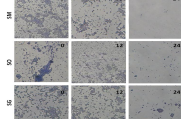
Dental caries is a chronic infectious disease that causes tooth loss and root breakdown in children and young adults, with a prevalence ranging from 60-80% in children and almost 100% in adults. Green synthesis of metallic nanoparticles is a highly economical and practical way to reduce antimicrobial resistance. Green synthesis of silver nanoparticles (AgNPs) was performed using silkworm pellets and validated by characterization studies (UV-visible spectroscopy, XRD, FTIR, and SEM). Antibacterial activity was evaluated against three oral bacterial strains (S. mutans, S. oralis, and S. gingivalis) by MIC, time-kill, and antibiofilm assays. qRT-PCR was performed to evaluate the expression of biofilm-formation genes (gftB, gftC, gftD, srtA, and comD). Scanning electron microscopy (SEM) showed that the synthesized AgNPs were between 40 and 55 nm (in). The synthesized AgNPs were found to reduce biofilms and exopolysaccharides in accordance with the MIC and agar well diffusion. Antibacterial activity was found to be highly significant with NPs, as evidenced by the downregulation of the qRT-PCR genes. The green-synthesized AgNPs from silkworm excreta exhibited antibacterial activity against oral bacteria, with a high percentage of biofilm inhibition and downregulation of biofilm-forming genes.
Downloads
Article Details
Section

This work is licensed under a Creative Commons Attribution-NonCommercial-NoDerivatives 4.0 International License.
How to Cite
References
1. Selwitz RH, Ismail AI, Pitts NB. Dental caries. The Lancet. 2007;369(9555):51-59. DOI: https://doi.org/10.1016/S0140-6736(07)60031-2
2. Yu OY, Lam WY-H, Wong AW-Y, Duangthip D, Chu C-H. Nonrestorative management of dental caries. Dent. J. 2021;9(10):121. DOI: https://doi.org/10.3390/dj9100121
3. Featherstone J. The continuum of dental caries—evidence for a dynamic disease process. J. Dent. Res. 2004;83(1_suppl):39-42. DOI: https://doi.org/10.1177/154405910408301s08
4. Thomas B, Ramesh A. Nanotechnol. Dent. Implantol. Nanomaterials in Dental Medicine: Springer; 2023. p. 159-175. DOI: https://doi.org/10.1007/978-981-19-8718-2_9
5. Hannig M, Hannig C. Nanotechnology and its role in caries therapy. Adv. Dent. Res. 2012;24(2):53-7. DOI: https://doi.org/10.1177/0022034512450446
6. Hoque J, Konai MM, Sequeira SS, Samaddar S, Haldar J. Antibacterial and antibiofilm activity of cationic small molecules with spatial positioning of hydrophobicity: an in vitro and in vivo evaluation. J. Med. Chem. 2016;59(23):10750-62. DOI: https://doi.org/10.1021/acs.jmedchem.6b01435
7. Zhang B, Zhao M, Tian J, Lei L, Huang R. Novel antimicrobial agents targeting the Streptococcus mutans biofilms discovery through computer technology. Front. Cell. Infect. Microbiol. 2022;12:1808. DOI: https://doi.org/10.3389/fcimb.2022.1065235
8. Kouidhi B, Al Qurashi YMA, Chaieb K. Drug resistance of bacterial dental biofilm and the potential use of natural compounds as alternative for prevention and treatment. Microb. Pathog. 2015;80:39-49. DOI: https://doi.org/10.1016/j.micpath.2015.02.007
9. Karibasappa G, Sujatha A. Antibiotic resistance-a concern for dentists. J. Dent. Med. Sci. 2014;13(2):112-118. DOI: https://doi.org/10.9790/0853-1324112118
10. Kaur N, Sahni P, Singhvi A, Hans MK, Ahluwalia AS. Screening the drug resistance property among aerobic pathogenic microorganisms of dental caries in north-western Indian population: a preliminary study. J. Clin. Diagn. Res. 2015;9(7):ZC05. DOI: https://doi.org/10.7860/JCDR/2015/11989.6143
11. Solomon SL, Oliver KB. Antibiotic resistance threats in the United States: stepping back from the brink. Am. Fam. Physician. 2014;89(12):938-41.
12. Chater AM, Family H, Abraao LM, Burnett E, Castro-Sanchez E, Du Toit B, et al. Influences on nurses' engagement in antimicrobial stewardship behaviours: a multi-country survey using the Theoretical Domains Framework. J. Hosp. Infect. 2022;129:171-80. DOI: https://doi.org/10.1016/j.jhin.2022.07.010
13. Piddock LJ. The crisis of no new antibiotics—what is the way forward? Lancet Infect. Dis. 2012;12(3):249-253. DOI: https://doi.org/10.1016/S1473-3099(11)70316-4
14. Bakhshi B, Malla S, Gowda LS. Garlic Mediated Green Synthesis of Silver Nanoparticles as Antifungal Agents against Magnaporthe oryzae. Indian J. Pharm. Educ. Res. 2022;56(4). DOI: https://doi.org/10.5530/ijper.56.4.207
15. Sudhakar M, Raman BV. Bactericidal and Antibiofilm Activity of Tannin Fractions Derived from Azadirachta against Streptococcus mutans. Asian J. Appl. Sci. 13: 132-143 DOI: 103923/ajaps. 2020;143. DOI: https://doi.org/10.3923/ajaps.2020.132.143
16. Sutthisa W, Sophachan H, Pimvichai P, Srisawad N. Antimicrobial Efficiency and Chemical Composition of Jackfruit (Artocarpus heterophyllus Lam.) Extracts from Different Plant Parts. Trop. J. Nat. Prod. Res. 2025;9(3):925-32. DOI: https://doi.org/10.26538/tjnpr/v9i3.6
17. Thammawithan S, Siritongsuk P, Nasompag S, Daduang S, Klaynongsruang S, Prapasarakul N, Patramanon R. A biological study of anisotropic silver nanoparticles and their antimicrobial application for topical use. Vet. Sci. 2021;8(9):177. DOI: https://doi.org/10.3390/vetsci8090177
18. Mishra B, Wang X, Lushnikova T, Zhang Y, Golla RM, Narayana JL, et al. Antibacterial, antifungal, anticancer activities and structural bioinformatics analysis of six naturally occurring temporins. Peptides. 2018;106:9-20. DOI: https://doi.org/10.1016/j.peptides.2018.05.011
19. Packiavathy IASV, Priya S, Pandian SK, Ravi AV. Inhibition of biofilm development of uropathogens by curcumin–an anti-quorum sensing agent from Curcuma longa. Food Chem. 2014;148:453-460. DOI: https://doi.org/10.1016/j.foodchem.2012.08.002
20. Gulube Z, Patel M. Effect of Punica granatum on the virulence factors of cariogenic bacteria Streptococcus mutans. Microb. Pathog. 2016;98:45-9. DOI: https://doi.org/10.1016/j.micpath.2016.06.027
21. Livak KJ, Schmittgen TD. Analysis of Relative Gene Expression Data Using Real-Time Quantitative PCR and the 2−ΔΔCT Method. Methods. 2001;25(4):402-408. DOI: https://doi.org/10.1006/meth.2001.1262
22. Augustine R, Rajarathinam K. Synthesis and characterization of silver nanoparticles and its immobilization on alginate coated sutures for the prevention of surgical wound infections and the in vitro release studies. 2012.
23. Thamilselvi V, Radha K. Synthesis of silver nanoparticles from Pseudomonas putida NCIM 2650 in silver nitrate supplemented growth medium and optimization using response surface methodology. Dig. J. Nanomater. Biostruct. 2013;8(3).
24. Bhanumathi R, Vimala K, Shanthi K, Thangaraj R, Kannan S. Bioformulation of silver nanoparticles as berberine carrier cum anticancer agent against breast cancer. New J Chem. 2017;41(23):14466-77. DOI: https://doi.org/10.1039/C7NJ02531A
25. Jeevanandam J, Barhoum A, Chan YS, Dufresne A, Danquah MK. Review on nanoparticles and nanostructured materials: history, sources, toxicity and regulations. Beilstein J. Nanotechnol. 2018;9(1):1050-1074. DOI: https://doi.org/10.3762/bjnano.9.98
26. Wang Y, Zeng Y, Wang Y, Li H, Yu S, Jiang W, et al. Antimicrobial peptide GH12 targets Streptococcus mutans to arrest caries development in rats. J. Oral Microbiol. 2019;11(1):1549921. DOI: https://doi.org/10.1080/20002297.2018.1549921
27. Gazoni VF, Balogun SO, Arunachalam K, Oliveira DM, Cechinel Filho V, Lima SR, et al. Assessment of toxicity and differential antimicrobial activity of methanol extract of rhizome of Simaba ferruginea A. St.-Hil. and its isolate canthin-6-one. J. Ethnopharmacol. 2018;223:122-134. DOI: https://doi.org/10.1016/j.jep.2018.05.014
28. Li L, Sun J, Xia S, Tian X, Cheserek MJ, Le G. Mechanism of antifungal activity of antimicrobial peptide APP, a cell-penetrating peptide derivative, against Candida albicans: intracellular DNA binding and cell cycle arrest. Appl. Microbiol. Biotechnol. 2016;100:3245-53. DOI: https://doi.org/10.1007/s00253-015-7265-y
29. Koo H, Falsetta M, Klein M. The exopolysaccharide matrix: a virulence determinant of cariogenic biofilm. J. Dent. Res. 2013;92(12):1065-73. DOI: https://doi.org/10.1177/0022034513504218
30. Hanada N, Kuramitsu HK. Isolation and characterization of the Streptococcus mutans gtfC gene, coding for synthesis of both soluble and insoluble glucans. Infect. Immun. 1988;56(8):1999-2005. DOI: https://doi.org/10.1128/iai.56.8.1999-2005.1988
31. Zhong H, Xie Z, Wei H, Zhang S, Song Y, Wang M, Zhang Y. Antibacterial and antibiofilm activity of Temporin-GHc and Temporin-GHd against cariogenic bacteria, Streptococcus mutans. Front. Microbiol. 2019;10:2854. DOI: https://doi.org/10.3389/fmicb.2019.02854