


Physicochemical and Functional Characterization of Chitosan from Meti Mussel in North Morowali Regency, Indonesia
Article Sidebar
Views | PDF/EPUB Downloads:
217
/ 164
/ 78
Main Article Content
Abstract
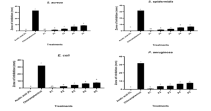
Chitosan is a biopolymer found in large quantities on Earth, particularly in the exoskeletons of insects, shrimp, and crabs. In this study, chitosan was isolated and characterized from meti shell (Batissa violaceae L.). Furthermore, four bacteria strains were used to investigate antibacterial activity of chitosan extracted from meti shell. The results showed that for chitosan with a 77.81% degree of deacetylation, Fourier Transform Infrared (FTIR) analysis verified the presence of NH out-of-plane bending (872 cm-1) and C-O-C stretching (1029 cm-1). Chitosan crystallinity was determined by X-ray diffraction (XRD), which showed a maximum peak at 29.39°. Furthermore, elemental analysis showed that the amount of carbon (12.01%) was higher compared to other elements such as hydrogen and nitrogen. The isolated chitosan showed antibacterial activity with a greater zone of inhibition against Staphylococcus aureus (22 mm) and a smaller zone of inhibition against Pseudomonas aeruginosa. The capacity to scavenge 1,1-diphenyl-2-picrylhydrazyl (DPPH) radicals varied from 48.85% to 82.65% at different doses ranging from 62.5-1000 ppm. Chitosan from meti shell was found to be non-toxic based on the results of BSLT. This study highlights the unique properties of chitosan from meti shell, making it a promising material for nanotechnology and medical applications.
Downloads
Article Details
Section

This work is licensed under a Creative Commons Attribution-NonCommercial-NoDerivatives 4.0 International License.
How to Cite
References
1. Produksi Perikanan-Kementerian Kelautan dan Perikanan Republik Indonesia [Internet]. https://portaldata.kkp.go.id/portals/data-statistik/prod-ikan/summary. 2018 [cited 2025 May 28].
2. Jamaluddin, Mappiratu, Septiawan, Yuyun Y. Analysis of Fatty Acid and Amino Acid Profile of “Meti” Mussels (Batissa violacea L. Von Lamarck, 1818) in La’a River of Petasia District North Morowali Regency. Rasayan J Chem. 2016;9(4):673–9.
3. Kaewprachu P, Jaisan C. Physicochemical Properties of Chitosan from Green Mussel Shells (Perna viridis): A Comparative Study. Polymers (Basel). 2023;15(13):1–14. DOI: https://doi.org/10.3390/polym15132816
4. Wulandari WT, Alam RN, Aprillia AY. Antibacterial Activities of Chitosan Synthesized from Chitin Isolated from Green Mussels (Perna viridis L.) Shell against Escherichia coli and Staphylococcus aureus. Pharm J Farm Indones (Pharmaceutical J Indones. 2021;18(2):345. DOI: https://doi.org/10.30595/pharmacy.v18i2.7936
5. Nuraeni N, Yuvie A, Pratama P, Herianti D, Kusumaningtyas V, Jasmansyah J. Antifungal and Wound Healing Activities of Chitosan Nanoparticles from Green Mussel Shell (Perna viridis) and Jernang (Daemonorops draco) Ethanol Extract Dressing Patch. Helium J Sci Appl Chem. 2022;2(2):33–9. DOI: https://doi.org/10.33751/helium.v2i2.6343
6. Varma R, Vasudevan S. Extraction, Characterization, and Antimicrobial Activity of Chitosan from Horse Mussel Modiolus modiolus. ACS Omega. 2020;5(32):20224–30. DOI: https://doi.org/10.1021/acsomega.0c01903
7. Piekarska K, Sikora M, Owczarek M, Jóźwik-Pruska J, Wiśniewska-Wrona M. Chitin and Chitosan as Polymers of the Future—Obtaining, Modification, Life Cycle Assessment and Main Directions of Application. Polymers (Basel). 2023;15(4):1–31. DOI: https://doi.org/10.3390/polym15040793
8. Kumari S, Kumar Annamareddy SH, Abanti S, Kumar Rath P. Physicochemical Properties and Characterization of Chitosan Synthesized from Fish Scales, Crab and Shrimp Shells. Int J Biol Macromol [Internet]. 2017;104:1697–705. DOI: https://doi.org/10.1016/j.ijbiomac.2017.04.119
9. Luthfiyana N, Ratrinia PW, Hidayat T. Optimization of Demineralization Stage in Chitosan Extraction from Mangrove Crab Shell (Scylla sp.). J Pengolah Has Perikan Indones. 2022;25(2):339–50. DOI: https://doi.org/10.17844/jphpi.v25i2.41853
10. Ridwanto R, Pratiwi A, Rani Z. Isolation and Toxicity Test of Chitosan from Green Mussels (Perna viridis L.) with Brine Shrimp Lethality Test (BSLT) Method. J Sains dan Kesehat. 2023;5(5):759–65. DOI: https://doi.org/10.25026/jsk.v5i5.2096
11. Martínez-Camacho AP, Cortez-Rocha MO, Ezquerra-Brauer JM, Graciano-Verdugo AZ, Rodriguez-Félix F, Castillo-Ortega MM, Yépiz-Gómez MS, Plascencia-Jatomea M. Chitosan Composite Films: Thermal, Structural, Mechanical and Antifungal Properties. Carbohydr Polym. 2010;82(2):305–15. DOI: https://doi.org/10.1016/j.carbpol.2010.04.069
12. Sahariah P, Cibor D, Zielińska D, Hjálmarsdóttir M, Stawski D, Másson M. The Effect of Molecular Weight on the Antibacterial Activity of N,N,N-trimethyl Chitosan (TMC). Int J Mol Sci. 2019;20(7):1–14. DOI: https://doi.org/10.3390/ijms20071743
13. Gobinath T, Thamizhselvan S, Ramakrishnan A, Ravichandran S. Preparation and Characterization of Chitosan from Perna viridis (Linnaeus, 1758) Shell Waste as Raw Material. Res J Pharm Technol. 2021;14(5):2757–62. DOI: https://doi.org/10.52711/0974-360X.2021.00486
14. Sulastri E, Yuyun Y, Heriani N, Khumaidi A. Application of Chitosan Shells Meti (Batissa violacea L. Von Lamarck, 1818) as Edible Film. Curr Res Nutr Food Sci. 2019;7(1):253–64. DOI: https://doi.org/10.12944/CRNFSJ.7.1.25
15. Lindangan L, Putranto B, Suhasman, Agussalim. Optimum Condition of the Hot-Pressing Process for Producing Particleboards using Chitosan Adhesive. J Perenn. 2019;15(2):67–73. DOI: https://doi.org/10.24259/perennial.v15i2.7650
16. Setha B, Rumata F, Sillaban B. Characteristics of Chitosan from White Leg Shrimp Shells Extracted Using Different Temperature and Time of the Deasetilation Process. J Pengolah Has Perikan Indones. 2019;22(3):498–507. DOI: https://doi.org/10.17844/jphpi.v22i3.29317
17. Kumari S, Rath P, Sri Hari Kumar A, Tiwari TN. Extraction and Characterization of Chitin and Chitosan from Fishery Waste by Chemical Method. Environ Technol Innov [Internet]. 2015;3:77–85. DOI: https://doi.org/10.1016/j.eti.2015.01.002
18. Musiam S, Aisyah N. Characterization of Chitosan from the Haliling Snail (Filopaludina javanica) Shell in South Kalimantan. Chem J Tek Kim. 2021;7(2):92–8. DOI: https://doi.org/10.26555/chemica.v7i2.18013
19. Kusnadi, Purgiyanti, Kumoro AC, Legowo AM. The Antioxidant and Antibacterial Activities of Chitosan Extract from White Shrimp Shell (Penaeus indicus) in the Waters North of Brebes, Indonesia. Biodiversitas. 2022;23(3):1267–72. DOI: https://doi.org/10.13057/biodiv/d230310
20. Pratiwi A, Ridwanto R. Tofu Shells Chitosan Toxicity Test (Meretrix meretrix L) with Brine Shrimp Lethality Test (BSLT) Method. J Farm Klin dan Sains. 2022;2(2):7–13. DOI: https://doi.org/10.26753/jfks.v2i2.984
21. Kurniawan H, Ropiqa M. Uji Toksisitas Ekstrak Etanol Daun Ekor Kucing (Acalypha hispida Burm.f.) dengan Metode Brine Shrimp Lethality Test (BSLT). J Syifa Sci Clin Res. 2021;3(2):52–62. DOI: https://doi.org/10.37311/jsscr.v3i2.11398
22. Majekodunmi SO, Olorunsola EO, Uzoaganobi CC. Comparative Physicochemical Characterization of Chitosan from Shells of Two Bivalved Mollusks from Two Different Continents. Am J Polym Sci [Internet]. 2017;2017(1):15–22.
23. Hekiem NLL, Ralib AAM, Hatta MAM, Ahmad FB, Nordin AN, Rahim RA, Za’bah NF. Effect of Chitosan Dissolved in Different Acetic Acid Concentration Towards VOC Sensing Performance of Quartz Crystal Microbalance Overlay with Chitosan. Mater Lett [Internet]. 2021;291:1–4. DOI: https://doi.org/10.1016/j.matlet.2021.129524
24. Pavoni JMF, Luchese CL, Tessaro IC. Impact of Acid Type for Chitosan Dissolution on the Characteristics and Biodegradability of Cornstarch/Chitosan Based Films. Int J Biol Macromol [Internet]. 2019;138:693–703. DOI: https://doi.org/10.1016/j.ijbiomac.2019.07.089
25. Bagiana IK, Nugraheni B, Wigati D. Physical Characteristics of Coating Film Combination of Corn Starch-Chitosan and the Determination of Vitamin C Levels in Fruit and Vegetable. J Farm Sains dan Prakt [Internet]. 2020;6(1):2579–4558.
26. Protan Laboratories Inc. Protan Biopolymers. Norway [NO]; 1987.
27. Danarto YC, Distantina S. Chitosan from Green Mussel (Perna viridis) Shells as Controlled Release Agent of Urea Fertilizer. 23rd Reg Chem [Internet]. 2016;(October 2016):1–4.
28. Shanmugam A, Subhapradha N, Suman S, Ramasamy P, Saravanan R, Shanmugam V, Srinivasan A. Characterization of Biopolymer “Chitosan” from the Shell of Donacid Clam Donax scortum (Linnaeus, 1758) and Its Antioxidant Activity. Int J Pharm Pharm Sci. 2012;4(2):460–5. DOI: https://doi.org/10.4103/2231-0738.106990
29. Sudatta BP, Sugumar V, Varma R, Nigariga P. Extraction, Characterization and Antimicrobial Activity of Chitosan from Pen Shell, Pinna bicolor. Int J Biol Macromol [Internet]. 2020;163:423–30. DOI: https://doi.org/10.1016/j.ijbiomac.2020.06.291
30. El-araby A, El Ghadraoui L, Errachidi F. Physicochemical Properties and Functional Characteristics of Ecologically Extracted Shrimp Chitosans with Different Organic Acids during Demineralization Step. Molecules. 2022;27(23):1–21. DOI: https://doi.org/10.3390/molecules27238285
31. Zamri AI, Latiff NF, Abdullah QH, Ahmad F. Extraction and Optimization of Chitosan from Razor Clam (Ensis arcuatus) Shells by Using Response Surface Methodology (RSM). Food Res. 2020;4(3):674–8. DOI: https://doi.org/10.26656/fr.2017.4(3).308
32. Pratama G, Munandar A, Surilayani D, Rizky JA, Hasanah AN, Haryati S, Meata BA, Nuryadin DFE, Aditia RP. Characteristics of Crab Shells and Green Mussel Shells as Potential Chitosan Material from Karangantu, Banten, Indonesia. IOP Conf Ser Earth Environ Sci. 2023;1137(012033):1–4. DOI: https://doi.org/10.1088/1755-1315/1137/1/012033
33. Suelo MS, Doblas GZ, Mohagan AB, Toledo JMS, Dela Cruz RY. In-vivo Safety Evaluation of Chitosan Extracted from the Pupal Exuviae of Hippotion celerio L. Trop J Nat Prod Res. 2024;8(10):8646–56.
34. Luo Q, Wang Y, Han Q, Ji L, Zhang H, Fei Z, Wang Y. Comparison of the Physicochemical, Rheological, and Morphologic Properties of Chitosan from Four Insects. Carbohydr Polym [Internet]. 2019;209:266–75. DOI: https://doi.org/10.1016/j.carbpol.2019.01.030
35. Hosney A, Ullah S, Barčauskaitė K. A Review of the Chemical Extraction of Chitosan from Shrimp Wastes and Prediction of Factors Affecting Chitosan Yield by Using an Artificial Neural Network. Mar Drugs. 2022;20(11):1–19. DOI: https://doi.org/10.3390/md20110675
36. Shanmugam A, Kathiresan K, Nayak L. Preparation, Characterization and Antibacterial Activity of Chitosan and Phosphorylated Chitosan from Cuttlebone of Sepia kobiensis (Hoyle, 1885). Biotechnol Reports [Internet]. 2016;9:25–30. DOI: https://doi.org/10.1016/j.btre.2015.10.007
37. Anggraeni AS, Jayanegara A, Laconi EB, Kumalasari NR, Windarsih A, Sofyan A. Physicochemical and Antibacterial Properties of Chitosan Extracted from Swimming Crab Shells and Wooden Grasshoppers using Different Extraction Methods. Food Res. 2024;8(3):439–50. DOI: https://doi.org/10.26656/fr.2017.8(3).313
38. Guarnieri A, Triunfo M, Scieuzo C, Ianniciello D, Tafi E, Hahn T, Zibek S, Salvia R, De Bonis A, Falabella P. Antimicrobial Properties of Chitosan from Different Developmental Stages of the Bioconverter Insect Hermetia illucens. Sci Rep [Internet]. 2022;12(1):1–12. DOI: https://doi.org/10.1038/s41598-022-12150-3
39. Smola-Dmochowska A, Lewicka K, Macyk A, Rychter P, Pamuła E, Dobrzyński P. Biodegradable Polymers and Polymer Composites with Antibacterial Properties. Int J Mol Sci. 2023;24(8):1–92. DOI: https://doi.org/10.3390/ijms24087473
40. de Torre MP, Cavero RY, Calvo MI, Vizmanos JLW. A Simple and A Reliable Method to Quantify Antioxidant Activity In Vivo. Antioxidants. 2019;8(5):1–11. DOI: https://doi.org/10.3390/antiox8050142
41. Manye SJ, Saleh JS, Ishaya HB, Chiroma SM, Attah MOO, Dibal NI. Phytochemical Screening and In-Vitro Antioxidant Activities of Aqueous and Methanol Extracts of Aloe vera. Pharmacol Res - Mod Chinese Med [Internet]. 2023;8(100291):1–5. DOI: https://doi.org/10.1016/j.prmcm.2023.100291
42. Banti CN, Hadjikakou SK. Evaluation of Toxicity with Brine Shrimp Assay. Bio-protocol. 2021;11(2):6–12. DOI: https://doi.org/10.21769/BioProtoc.3895
43. Meyer BN, Ferrigni NR, Putnam JE, Jacobsen LB, Nichols DE, McLaughlin JL. Brine shrimp: A Convenient General Bioassay for Active Plant Constituents. Planta Med. 1982;45(1):31–4. DOI: https://doi.org/10.1055/s-2007-971236