


Hepatoprotective Effect of Ethanol Extract of Chinese Betel Herb (Peperomia pellucida (L.)) On CCl4-Induced Hepatotoxicity in Experimental Animals
Article Sidebar
Views | PDF/EPUB Downloads:
254
/ 178
/ 89
Main Article Content
Abstract
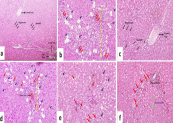
Chinese betel herb (Peperomia pellucida) contains secondary metabolites, such as alkaloids, flavonoids, phenolics, tannins, saponins, and terpenoids with pharmacological potential. Therefore, this study aims to evaluate the hepatoprotective effect of ethanol extract of P. pelluica herb (EPP) on liver damage caused by CCl4 toxicity. The test was conducted for twenty-one days on 30 male Wistar rats divided into six groups, namely normal control (Na CMC 0.5%), negative control (CCl4 1 mL/kg BW), positive control (Silymarin 100 mg/kg BW), EPP test treatment group with doses of 100, 200, and 400 mg/kg BW. The protective effect of the extract was evaluated based on liver biochemical parameters, macroscopic analysis, and histopathology. The study showed that the EPP group experienced a significant decrease in SGPT, SGOT, ALP, and Total Bilirubin levels. Macroscopic observations and liver organ indices showed liver criteria that resembled normal. Meanwhile, histopathology analysis showed a linear improvement in liver tissue structure with increasing doses. EPP herb can potentially protect the liver from damage caused by CCl4 hepatotoxicity.
Downloads
Article Details
Section

This work is licensed under a Creative Commons Attribution-NonCommercial-NoDerivatives 4.0 International License.
How to Cite
References
Qu J, Huang P, Zhang L, Qiu Y, Qi H, Leng A, Shang D. Hepatoprotective effect of plant polysaccharides from natural resources: A review of the mechanisms and structure-activity relationship. Int. J. Biol. Macromol. 2020; 161:24–34. Doi: 10.1016/j.ijbiomac.2020.05.196. DOI: https://doi.org/10.1016/j.ijbiomac.2020.05.196
Feng XH, Xu HY, Wang JY, Duan S, Wang YC, Ma CM. In vivo hepatoprotective activity and the underlying mechanism of chebulinic acid from Terminalia chebula fruit. Phytomedicine. 2021; 83:1–10. Doi: 10.1016/j.phymed.2021.153479 DOI: https://doi.org/10.1016/j.phymed.2021.153479
Hamad Shareef S, Abdel Aziz Ibrahim I, Alzahrani AR, Al-Medhtiy MH, Ameen Abdulla M. Hepatoprotective effects of methanolic extract of green tea against Thioacetamide-Induced liver injury in Sprague Dawley rats. Saudi J. Biol. Sci. 2022; 29:564–573. Doi: 10.1016/j.sjbs.2021.09.023 DOI: https://doi.org/10.1016/j.sjbs.2021.09.023
World Health Organization. World health statistics 2024: Monitoring health for the SDGs, Sustainable Development Goals. 2024.
Ministry of Health of Indonesia. Indonesian Health Survey 2023. Jakarta: 2023. 185-188. p
Gonfa YH, Bachheti A, Semwal P, Rai N, Singab AN, Bachheti R kumar. Hepatoprotective activity of medicinal plants, their phytochemistry, and safety concerns: a systematic review. Zeitschrift Für Naturforsch C. 2025; 80:61–73. Doi: 10.1515/znc-2024-0116 DOI: https://doi.org/10.1515/znc-2024-0116
Ndudi J, Yovwin GD, Igben VO, Abe B, Akoko S, Oritsemuelebi B, Chimezie J, Emeka A & Dagogo G. Chemical characterization, in vivo anti-oxidant, anti-inflammatory and anti- apoptotic properties of Peperomia pellucida in modulating vascular tone in Swiss mice exposed to aluminium chloride. Pharmacol. Res. Nat. Prod. 2024; 3:1–11. Doi: 10.1016/j.prenap.2024.100034 DOI: https://doi.org/10.1016/j.prenap.2024.100034
Alves NSF, Setzer WN, da Silva JKR. The chemistry and biological activities of Peperomia pellucida (Piperaceae): A critical review. J. Ethnopharmacol. 2019; 232:90–102. Doi: 10.1016/j.jep.2018.12.021 DOI: https://doi.org/10.1016/j.jep.2018.12.021
Ho KL, Yong PH, Wang CW, Kuppusamy UR, Ngo CT, Massawe F, Ng ZX. Peperomia pellucida (L.) Kunth and eye diseases: A review on phytochemistry, pharmacology and toxicology. J. Integr. Med. 2022; 20(4):292–304. Doi: 10.1016/j.joim.2022.02.002 DOI: https://doi.org/10.1016/j.joim.2022.02.002
Ahmad I, Ambarwati N, Elya B, Omar H, Mulia K, Yanuar A, Negishi O & Muńim A. A new angiotensin-converting enzyme inhibitor from Peperomia pellucida (L.) Kunth. Asian Pac. J. Trop. Biomed. 2019; 9(6):257–262. Doi: 10.4103/2221-1691.260398 DOI: https://doi.org/10.4103/2221-1691.260398
Amang AP, Kodji E, Mezui C, Baane MP, Siwe GT, Kuissu TM, Emakoua J & Tan PV. Hepatoprotective Effects of Aqueous Extract of Opilia celtidifolia (Opiliaceae) Leaves against Ethanol-Induced Liver Damage in Rats. Evidence-based Complement. Altern. Med. 2020; 2020:1–8. Doi: 10.1155/2020/6297475 DOI: https://doi.org/10.1155/2020/6297475
Fitrya F, Amriani A, Puspa Novita R, Fatya Sahara V, Rizki M, Rahma M,Muharni, M & Wahyuni FS. Hepatoprotective effect of the ethyl acetate fraction of Indonesian Artocarpus species against CCl4 induced liver injury in rat. J. Res. Pharm. 2024; 28(4):952–960. Doi: 10.29228/jrp.778. DOI: https://doi.org/10.29228/jrp.778
Sinaga E, Fitrayadi A, Asrori A, Rahayu SE, Suprihatin S, Prasasty VD. Hepatoprotective effect of Pandanus odoratissimus seed extracts on paracetamol-induced rats. Pharm. Biol. 2021; 59(1):31–39. Doi: 10.1080/13880209.2020.1865408 DOI: https://doi.org/10.1080/13880209.2020.1865408
Rakib A, Ahmed S, Islam MA, Haye A, Uddin SMN, Uddin MMN, Hossain MK, Emran TB. Antipyretic and hepatoprotective potential of Tinospora crispa and investigation of possible lead compounds through in silico approaches. Food Sci. Nutr. 2020; 8(1): 547–556. Doi: 10.1002/fsn3.1339 DOI: https://doi.org/10.1002/fsn3.1339
Hashem MM, Salama MM, Mohammed FF, Tohamy AF, El Deeb KS. Metabolic profile and hepatoprotective effect of Aeschynomene elaphroxylon (Guill. & Perr.). PLoS One 2019; 14(1):1–24. Doi: 10.1371/journal.pone.0210576 DOI: https://doi.org/10.1371/journal.pone.0210576
Iqbal N, Zubair HM, Almutairi MH, Abbas M, Akhtar MF, Aleya L, Kamel M, Saleem A, Jabeen Q, Noreen S, Baig MMFA & Abdel-Daim MM. Hepatoprotective effect of Cordia rothii extract against CCl4-induced oxidative stress via Nrf2–NFκB pathways. Biomed. Pharmacother. 2022; 156:1–9. Doi: 10.1016/j.biopha.2022.113840 DOI: https://doi.org/10.1016/j.biopha.2022.113840
Oleshchuk O, Ivankiv Y, Falfushynska H, Mudra A, Lisnychuk N. Hepatoprotective effect of melatonin in toxic liver injury in rats. Med. 2019; 55(304):1–11. Doi: 10.3390/medicina55060304 DOI: https://doi.org/10.3390/medicina55060304
Meng X, Tang GY, Liu PH, Liu Q, Li H Bin, Zhao CJ. Antioxidant activity and hepatoprotective effect of 10 medicinal herbs on CCl4-induced liver injury in mice. World J. Gastroenterol. 2020; 26(37):5629–5645. Doi: 10.3748/wjg.v26.i37.5629 DOI: https://doi.org/10.3748/wjg.v26.i37.5629
Alqahtani NK, Mohamed HA, Moawad ME, Younis NS, Mohamed ME. The Hepatoprotective Effect of Two Date Palm Fruit Cultivars’ Extracts: Green Optimization of the Extraction Process. Foods. 2023; 12(6): 1-27. Doi: 10.3390/foods12061229 DOI: https://doi.org/10.3390/foods12061229
Huang YW, Tuozo AJ, Tan RS. Hepatotoxicity and Mutagenicity assessment during chronic in vivo exposure to aqueous extracts from Peperomia pellucida. An. Acad. Bras. Cienc. 2022; 94(2): 1–9. Doi: 10.1590/0001-3765202220191255 DOI: https://doi.org/10.1590/0001-3765202220191255
Delwatta SL, Gunatilake M, Baumans V, Seneviratne MD, Dissanayaka MLB, Batagoda SS, Udagedara AH & Walpola PB. Reference values for selected hematological, biochemical and physiological parameters of Sprague-Dawley rats at the Animal House, Faculty of Medicine, University of Colombo, Sri Lanka. Anim. Model. Exp. Med. 2018; 1(4): 250–254. Doi: 10.1002/ame2.12041 DOI: https://doi.org/10.1002/ame2.12041
Iluz-Freundlich D, Zhang M, Uhanova J. Minuk G Y The relative expression of hepatocellular and cholestatic liver enzymes in adult patients with liver disease. Ann. Hepatol. 2020; 19(2020): 204–208. Doi: 10.1016/j.aohep.2019.08.004 DOI: https://doi.org/10.1016/j.aohep.2019.08.004
Geresu GD, Umer S, Arayaselassie M, Ashebir G, Makonnen E. Hepatoprotective Effects of Crude Stem Bark Extracts and Solvent Fractions of Cordia africana against Acetaminophen-Induced Liver Injury in Rats. Can. J. Gastroenterol. Hepatol. 2022; 2022:1–11. Doi: 10.1155/2022/1449286. DOI: https://doi.org/10.1155/2022/1449286
Fitrya, Lamin S, Ashfa FA, Novita A, Amriani A. The potency of ethyl acetate fraction of cempedak (Artocarpus champeden) leaves in attenuating the nephrotoxic effect in gentamicin-piroxicam-induced rat models. J. Ayurveda Integr. Med. 2025; 16(2025): 1–7.Doi: 10.1016/j.jaim.2024.101040 DOI: https://doi.org/10.1016/j.jaim.2024.101040
Zhang G, Wang X, Chung TY, Ye W, Hodge L, Zhang L, Chng K, Xiao YF & Wang YJ. Carbon tetrachloride (CCl4) accelerated development of non-alcoholic fatty liver disease (NAFLD)/steatohepatitis (NASH) in MS-NASH mice fed western diet supplemented with fructose (WDF). BMC Gastroenterol. 2020; 20(339):1–13. Doi: 10.1186/s12876-020-01467-w. DOI: https://doi.org/10.1186/s12876-020-01467-w
Beltran-Benjamin KS, Co EL, Gaspi SAD, Matibag JLR, Su GLS. Enzyme Activity and Histopathology of Rat Liver Treated with Crude Methanolic Extract of Pepperomia pellucida (L). J. Biol. Sci. 2013; 13(4):183–195. Doi: 10.3923/jbs.2013.183.195. DOI: https://doi.org/10.3923/jbs.2013.183.195
Ng ZX, Than MJY, Yong PH. Peperomia pellucida (L.) Kunth herbal tea: Effect of fermentation and drying methods on the consumer acceptance, antioxidant and anti-inflammatory activities. Food Chem. 2021; 344 (2021):1-9. Doi: 10.1016/j.foodchem.2020.128738. DOI: https://doi.org/10.1016/j.foodchem.2020.128738
Gomes PWP, Barretto H, Reis JDE, Muribeca A, Veloso A, Albuquerque C, Teixeira A, Braamcamp W, Pamplona S, Silva C & Silva M. Chemical Composition of Leaves, Stem, and Roots of Peperomia pellucida (L.) Kunth. Molecules. 2022; 27(6):1–12. Doi: 10.3390/molecules27061847 DOI: https://doi.org/10.3390/molecules27061847
He M, Min JW, Kong WL, He XH, Li JX, Peng BW. A review on the pharmacological effects of vitexin and isovitexin. Fitoterapia. 2016;115:74–85. Doi: 10.1016/j.fitote.2016.09.011. DOI: https://doi.org/10.1016/j.fitote.2016.09.011
Ho K, Tan GG, Yong PH, Wang CW, Lim SH, Kuppusamy UR, Ngo Ct, Massawe F, Ng ZX. Extraction of phytochemicals with health benefit from Peperomia pellucida (L.) Kunth through liquid-liquid partitioning. J. Appl. Res. Med. Aromat. Plants. 2022; 30(2022): 1–10 . Doi: 10.1016/j.jarmap.2022.100392 DOI: https://doi.org/10.1016/j.jarmap.2022.100392
Silva RO, Sousa FBM, Damasceno SRB, Carvalho NS, Silva VG, Oliveira FRMA, Sousa DP, Aragão KS, Barbosa AL R, Freitas RM & Medeiros JVR. Phytol, a diterpene alcohol, inhibits the inflammatory response by reducing cytokine production and oxidative stress. Fundam. Clin. Pharmacol. 2014; 28(4):455–464. Doi: 10.1111/fcp.12049. DOI: https://doi.org/10.1111/fcp.12049