


Triterpenoid Extraction from Ficus racemosa Leaves: Impact of Key Processing Factors
Article Sidebar
Views | PDF/EPUB Downloads:
287
/ 184
/ 89
Main Article Content
Abstract
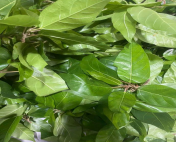
Ficus racemosa leaves are a rich source of triterpenoids with anti-inflammatory, antibacterial, and antioxidant properties. These compounds have potential applications in pharmaceuticals, cosmetics, and functional foods. This study aimed to optimize triterpenoid extraction from Ficus racemosa leaves by evaluating the effects of raw material-to-solvent ratio, temperature, and extraction time. The presence of secondary metabolites, including phenolics, flavonoids, tannins, saponins, and terpenoids, was analyzed. Extraction efficiency was optimized based on yield and compound stability under different conditions. Ficus racemosa leaves contain various bioactive compounds, with phenolics and saponins being the most abundant. The extraction conditions were a drying temperature of 50°C, a raw material-to-solvent ratio of 1:150, an extraction temperature of 50°C, and an extraction time of 60 minutes, ensuring maximum triterpenoid yield without degradation. This study provides a basis for efficient triterpenoid extraction from Ficus racemosa leaves, supporting their potential applications in pharmaceuticals, cosmetics, and functional foods.
Downloads
Article Details
Section

This work is licensed under a Creative Commons Attribution-NonCommercial-NoDerivatives 4.0 International License.
How to Cite
References
Sharma BR, Kumar V, Kumar S, Panesar PS. Microwave Assisted Extraction of Phytochemicals from Ficusracemosa. Curr Res Green Sustain Chem. 2020; 3:100020. DOI: https://doi.org/10.1016/j.crgsc.2020.100020
Liu J, Yin X, Kou C, Thimmappa R, Hua X, Xue Z. Classification, Biosynthesis, and Biological Functions of Triterpene Esters in Plants. Plant Commun. 2024; 5(4):100845. DOI: https://doi.org/10.1016/j.xplc.2024.100845
Cavazos P, Gonzalez D, Lanorio J, Ynalvez R. Secondary Metabolites, Antibacterial and Antioxidant Properties of the Leaf Extracts of Acacia rigidula Benth and Acacia berlandieri Benth. SN Appl Sci. 2021; 3:522. DOI: https://doi.org/10.1007/s42452-021-04513-8
Sarkar T, Salauddin M, Roy S, Chakraborty R, Rebezov M, Shariati MA, Thiruvengadam M, Rengasamy KRR. Underutilized Green Leafy Vegetables: Frontier in Fortified Food Development and Nutrition. Crit Rev Food Sci Nutr. 2023; 63(33):11679-11733. DOI: https://doi.org/10.1080/10408398.2022.2095555
Egüés I, Hernandez-Ramos F, Rivilla I, Labidi J. Optimization of Ultrasound Assisted Extraction of Bioactive Compounds from Apple Pomace. Molecules. 2021; 26(13):3783. DOI: https://doi.org/10.3390/molecules26133783
Yang YP, Hussain N, Zhang L, Jia YZ, Jian YQ, Li B, Choudhary MI, Rahman A, Wang W. Kadsura coccinea: A Rich Source of Structurally Diverse and Biologically Important Compounds. Chin Herb Med. 2020; 12(3):214-223. DOI: https://doi.org/10.1016/j.chmed.2020.03.006
Dhawale PV, Vineeth SK, Gadhave RV, MJ JF, Supekar MV, Thakur VK, Raghavan P. Tannin as a Renewable Raw Material for Adhesive Applications: A Review. Mater Adv. 2022; 3(8):3365-3388. DOI: https://doi.org/10.1039/D1MA00841B
Aboelez MO, Ezelarab HA, Alotaibi G, Abouzed DEE. Inflammatory Setting, Therapeutic Strategies Targeting Some Pro-Inflammatory Cytokines and Pathways in Mitigating Ischemia/Reperfusion-Induced Hepatic Injury: A Comprehensive Review.Naunyn-Schmiedeberg's Arch Pharmacol. 2024; 397(9):6299-6315. DOI: https://doi.org/10.1007/s00210-024-03074-y
Hidayanti BR, Suryani N, Dewi YK. Phytochemical Screening and Antioxidant Activity Test of Ara Fruit Extract (Ficus racemosa Linn.) Using DPPH Method. SPIN J Kim Pend. Kim. 2023; 5(2):177-191.
Mohapatra P, Ray A, Jena S, Nayak S, Mohanty S. Influence of Various Drying Methods on Physicochemical Characteristics, Antioxidant Activity, and Bioactive Compounds in Centellaasiatica L. Leaves: A Comparative Study. Biotechnologia. 2022; 103(3):235-247. DOI: https://doi.org/10.5114/bta.2022.118666
Wu Q and Zhou J. The Application of Polyphenols in Food Preservation. Adv Food Nutr Res. 2021; 98:35-99. DOI: https://doi.org/10.1016/bs.afnr.2021.02.005
Tsevdou M, Ntzimani A, Katsouli M, Dimopoulos G, Tsimogiannis D, Taoukis P. Comparative Study of Microwave, Pulsed Electric Fields, and High Pressure Processing on the Extraction of Antioxidants From Olive Pomace. Molecules. 2024; 29(10):2303. DOI: https://doi.org/10.3390/molecules29102303
Ozdemir M, Gungor V, Melikoglu M, Aydiner C. Solvent Selection and Effect of Extraction Conditions on Ultrasound-Assisted Extraction of Phenolic Compounds from Galangal (Alpiniaofficinarum). J Appl Res Med Aromat Plants. 2024; 38:100525. DOI: https://doi.org/10.1016/j.jarmap.2023.100525
Zhang G, Ma Y, Huang M, Jia K, Ma T, Dai Z, Wang Q. Reprograming the Carbon Metabolism of Yeast for Hyperproducing Mevalonate, a Building Precursor of the Terpenoid Backbone. J Agric Food Chem. 2024; 73(1):606-616. DOI: https://doi.org/10.1021/acs.jafc.4c09874
Celli GB, Ghanem A, and Brooks MS-L. Optimization of Ultrasound-Assisted Extraction of Anthocyanins from Haskap Berries (Lonicera caerulea L.) Using Response Surface Methodology. Ultrasonics Sonochemistry. 2015; 27:449-455. DOI: https://doi.org/10.1016/j.ultsonch.2015.06.014
Muzafri A and Karno R. Testing of Andaliman Extract (Zanthoxylum Acanthopodium Dc) With 4 Types of Solutions (Ethyl Acetate, Aquades, Methanol, and Hexane) on Growth of Bacteria Escherichia Coli. KESANS: Int J Health Sci. 2022; 1(4):337-343. DOI: https://doi.org/10.54543/kesans.v1i4.50
Dietemann P, Kälin M, Zumbühl S, Knochenmuss R, Wülfert S, and Zenobi R. A Mass Spectrometry and Electron Paramagnetic Resonance Study of Photochemical and Thermal Aging of Triterpenoid Varnishes. Anal Chem. 2001; 73(9):2087-2096. DOI: https://doi.org/10.1021/ac000754w
Fontanals N, Borrull F, Marcé RM. Ionic Liquids in Solid-Phase Extraction. TrAC - Trends Anal Chem. 2012; 41:15-26. DOI: https://doi.org/10.1016/j.trac.2012.08.010
Deka A, Sarma I, Dey S, and Sarma T. Antimicrobial Properties and Phytochemical Screening of Some Wild Macrofungi of Rani-Garbhanga Reserve Forest Area of Assam,India. Adv Appl Sci Res. 2017; 8(3):17-22.
Bodi D, Ronczka S, Gottschalk C, Behr N, Skibba A, Wagner M, Lahrssen-Wiederholt M, Preiss-Weigert A, and These A. Determination of Pyrrolizidine Alkaloids in Tea, Herbal Drugs and Honey. Food Addit Contam, Part A. 2014; 31(11):1886-1895. DOI: https://doi.org/10.1080/19440049.2014.964337
Tailor G and Lawal A. Phytochemical Screening; Green Synthesis, Characterization and Biological Significance of Lead Oxide Nanoparticles from Eucalyptus globulusLabill.(Leaves). Nanotechnol Environ Eng. 2021; 6(3):48. DOI: https://doi.org/10.1007/s41204-021-00143-y
Odebiyi O and Sofowora E. Phytochemical Screening of Nigerian Medicinal Plants II. Lloydia. 1978; 41(3):234-246.
Llauradó G, Morris HJ, Lebeque Y, Gutiérrez A, Fontaine R, Bermúdez RC, and Perraud-Gaime I. Phytochemical Screening and Effects on Cell-Mediated Immune Response of Pleurotus Fruiting Bodies Powder. Food Agric Immunol. 2013; 24(3):295-304. DOI: https://doi.org/10.1080/09540105.2012.686988