


The Employment of FTIR Spectroscopy and Multivariate Data Analysis for Authentication Study of Sacha Inchi Seed Oil
Article Sidebar
Views | PDF/EPUB Downloads:
0
/ 0
/ 0
Main Article Content
Abstract
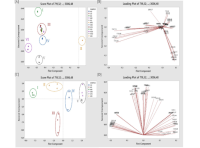
Sacha inchi (Plukenetia volubilis) is recognized as one of the world’s most versatile plants, with nearly all parts suitable for use as food ingredients. Sacha inchi seed oil (SIO) commands a premium price in the online market, approximately tenfold higher than conventional vegetable oils such as palm oil (PO), making it a prime target for economically motivated adulteration. This study aimed to establish a robust analytical approach for the discrimination and quantification of PO and soybean oil (SBO) adulterants in authentic SIO using Fourier Transform Infrared (FTIR) spectroscopy coupled with chemometrics. FTIR spectral data were acquired for pure SIO, PO, SBO, and their mixtures across the mid-infrared range (4000–650 cm⁻¹). Principal component analysis (PCA) of full-spectrum absorbance values revealed spectral proximity between SIO and SBO, indicating potential challenges in visual differentiation. Principal component regression (PCR) applied to selected spectral regions (3010–2830 and 1800–700 cm⁻¹) yielded the highest calibration and prediction performance, with coefficients of determination (R²) values of 0.9991 and minimal root mean square error of calibration (RMSEC = 0.620) and validation (RMSEP = 0.658). The developed models demonstrated high accuracy and precision, validating the reliability of FTIR-chemometric integration for authenticating SIO and detecting adulteration with lower-cost oils. This approach offers a rapid, non-destructive, and cost-effective solution for quality control in functional oil authentication.
Downloads
Article Details
Section

This work is licensed under a Creative Commons Attribution-NonCommercial-NoDerivatives 4.0 International License.
How to Cite
References
1.Cárdenas DM, Rave LJG, Soto JA. Biological activity of Sacha Inchi (Plukenetia volubilis Linneo) and potential uses in human health: A review. Univ Zagreb. 2021; https://doi.org/10.17113/ftb.59.03.21.6683
2.Samrit T, Osotprasit S, Chaiwichien A, Suksomboon P, Chansap S. Cold-pressed Sacha Inchi oil: High in omega-3 and prevents fat accumulation in the liver. 2024.
3.Mhd Rodzi NAR, Lee LK. Sacha Inchi (Plukenetia volubilis L.): Recent insight on phytochemistry, pharmacology, organoleptic, safety and toxicity perspectives. Heliyon. 2022; https://doi.org/10.1016/j.heliyon.2022.e10572
4.Wang S, Zhu F, Kakuda Y. Sacha Inchi (Plukenetia volubilis L.): Nutritional composition, biological activity, and uses. Food Chem. 2018; 265:316–328. https://doi.org/10.1016/j.foodchem.2018.05.055
5.Sudhakar A, Chakraborty SK, Mahanti NK, Varghese C. Advanced techniques in edible oil authentication: A systematic review and critical analysis. Crit Rev Food Sci Nutr. 2023; https://doi.org/10.1080/10408398.2021.1956424
6.Rohman A, Man YBC. Application of Fourier transform infrared spectroscopy for authentication of functional food oils. Appl Spectrosc Rev. 2012; 47(1):1–13. https://doi.org/10.1080/05704928.2011.619020
7.Filoda PF, Fetter LF, Fornasier F, Schneider R de C de S, Helfer GA, Tischer B, Teichmann A, da Costa AB. Fast methodology for identification of olive oil adulterated with a mix of different vegetable oils. Food Anal Methods. 2019; 12(1):293–304. https://doi.org/10.1007/s12161-018-1360-5
8.Rohman A, Che Man YB. The use of Fourier transform mid infrared (FT-MIR) spectroscopy for detection and quantification of adulteration in virgin coconut oil. Food Chem. 2011; 129(2):583–588. https://doi.org/10.1016/j.foodchem.2011.04.070
9.Quiñones-Islas N, Meza-Márquez OG, Osorio-Revilla G, Gallardo-Velazquez T. Detection of adulterants in avocado oil by Mid-FTIR spectroscopy and multivariate analysis. Food Res Int. 2013; 51(1):148–154. https://doi.org/10.1016/j.foodres.2012.11.037
10.Rohman A, Riyanto S, Sasi AM, Yusof FM. The use of FTIR spectroscopy in combination with chemometrics for the authentication of red fruit (Pandanus conoideus Lam) oil from sunflower and palm oils. Food Biosci. 2014; 7:64–70. https://doi.org/10.1016/j.fbio.2014.05.007
11.Syafri S, Hafiz A, Syofyan S, Alen Y, Hamidi D. FT-IR fingerprinting analysis for classification of west sumatra small ginger (Zingiber officinale Roscoe) essential oil and its antioxidant activity. Trop J Nat Prod Res. 2024; 8: 6081–6086.
12.Rohman A, Che Man YB. Authentication of extra virgin olive oil from sesame oil using FTIR spectroscopy and gas chromatography. Int J Food Prop. 2012; 15(6):1309–1318. https://doi.org/10.1080/10942912.2010.521607
13.Maggio RM, Kaufman TS, Del Carlo M, Cerretani L, Bendini A, Cichelli A, Compagnone D. Monitoring of fatty acid composition in virgin olive oil by Fourier transformed infrared spectroscopy coupled with partial least squares. Food Chem. 2009; 114(4):1549–1554. https://doi.org/10.1016/j.foodchem.2008.11.029
14.Muangrat R, Veeraphong P, Chantee N. Screw press extraction of Sacha Inchi seeds: Oil yield and its chemical composition and antioxidant properties. J Food Process Preserv. 2018; 42(6) e13635. https://doi.org/10.1111/jfpp.13635
15.Kong S, Keang T, Bunthan M, Say M, Nat Y, Tan CP, Tan R. Hydraulic cold-pressed extraction of Sacha Inchi seeds: Oil yield and its physicochemical properties. ChemEngineering. 2023; 7(4). https://doi.org/10.3390/chemengineering7040069
16.Falodun A, Siraj R, Choudhary MI. GC-MS analysis of insecticidal leaf essential oil of Pyrenacantha staudtii Hutch and Dalz (Icacinaceae). Trop J Pharm Res. 2009;8(2):139–143. https://doi.org/10.4314/tjpr.v8i2.44522
17.Khudzaifi M, Retno SS, Rohman A. The employment of FTIR spectroscopy and chemometrics for authentication of essential oil of Curcuma mangga from candle nut oil. Food Res. 2020; 4(2):515–521. https://doi.org/10.26656/fr.2017.4(2).313
18.Che Man YB, Rohman A, Mansor TST. Differentiation of lard from other edible fats and oils by means of Fourier transform infrared spectroscopy and chemometrics. J Am Oil Chem Soc. 2011; 88(2):187–192. https://doi.org/10.1007/s11746-010-1659-x
19.Brereton RG. Pattern recognition in chemometrics. Chemom Intell Lab Syst. 2015; 149:90–96. https://doi.org/10.1016/j.chemolab.2015.06.012
20.Rozali NL, Azizan KA, Singh R, Syed Jaafar SN, Othman A, Weckwerth W, Ramli US. Fourier transform infrared (FTIR) spectroscopy approach combined with discriminant analysis and prediction model for crude palm oil authentication of different geographical and temporal origins. Food Control. 2023; 146:109509. https://doi.org/10.1016/j.foodcont.2022.109509
21.Irnawati, Rohman A, Yamin, Fadzillah NA, Azmi AA, Nurlatifah, Windarsih A, Susidarti RA, Ruslin. Moringa oleifera seed oils: Physico-chemical characterization and its authentication using FTIR spectroscopy and chemometrics. Case Stud Chem Environ Eng. 2024; 10:100994. https://doi.org/10.1016/j.cscee.2024.100994
22.Faisal MI, Iqbal S, Basra SMA, Afzal I, Saddiq MS, Bakhtavar MA, Hafeez MB. Moringa landraces of Pakistan are potential source of premium quality oil. S Afr J Bot. 2020; 129:397–403. https://doi.org/10.1016/j.sajb.2019.10.002
23.Wabaidur SM, AlAmmari A, Aqel A, AL-Tamrah SA, Alothman ZA, Ahmed AYBH. Determination of free fatty acids in olive oils by UPHLC–MS. J Chromatogr B Analyt Technol Biomed Life Sci. 2016; 1031:109–115. https://doi.org/10.1016/j.jchromb.2016.07.040
24.Rigano F, Vento F, Cafarella C, Trovato E, Trozzi A, Dugo P, Mondello L. Determination of main lipids and volatile compounds in unconventional cold-pressed seed oils through chromatographic techniques. J Food Sci. 2025; 90(1):1–17. https://doi.org/10.1111/1750-3841.17661
25.Meng X, Yin C, Yuan L, Zhang Y, Ju Y, Xin K, Chen W, Lv K, Hu L. Rapid detection of adulteration of olive oil with soybean oil combined with chemometrics by Fourier transform infrared, visible-near-infrared and excitation-emission matrix fluorescence spectroscopy: A comparative study. Food Chem. 2023; 405:134828. https://doi.org/10.1016/j.foodchem.2022.134828
26.Sabahannur S, Alimuddin S. Identification of fatty acids in virgin coconut oil (VCO), cocoa beans, crude palm oil (CPO), and palm kernel beans using gas chromatography. IOP Conf Ser Earth Environ Sci. 2022; 1083(1). https://doi.org/10.1088/1755-1315/1083/1/012036
27.Hristy AAC, Asemsumran SK, Yiping DU, Zaki YO. The detection and quantification of adulteration in olive oil by near-infrared spectroscopy and chemometrics. Anal Sci. 2004; 20(June): 935–940.
28.Yap KY, Yung S, Lim CS. Infrared-based protocol for the identification and categorization of ginseng and its products. Food Res Int. 2007; 40(5):643–652. https://doi.org/10.1016/j.foodres.2006.11.009
29.Yang H, Irudayaraj J. Characterization of semisolid fats and edible oils by Fourier transform infrared photoacoustic spectroscopy. J Am Oil Chem Soc. 2000; 77(3):291–295. https://doi.org/10.1007/s11746-000-0048-y
30.Maurer NE, Hatta-Sakoda B, Pascual-Chagman G, Rodriguez-Saona LE. Characterization and authentication of a novel vegetable source of omega-3 fatty acids, Sacha Inchi (Plukenetia volubilis L.) oil. Food Chem. 2012; 134(2):1173–1180. https://doi.org/10.1016/j.foodchem.2012.02.143
31.Fahmi Z, Mudasir, Rohman A. Attenuated total reflectance-FTIR spectra combined with multivariate calibration and discrimination analysis for analysis of patchouli oil adulteration. Indones J Chem. 2020; 20(1):1–8. https://doi.org/10.22146/ijc.36955 .
32.Guillén MD, Ruiza A, Caboa N, Chirinosb R, Pascualb G. Characterization of Sacha Inchi (Plukenetia volubilis L.) oil by FTIR spectroscopy and 1H NMR. Comparison with linseed oil. J Am Oil Chem Soc. 2003; 80(8):755–762.
33.Arslan FN, Akin G, Karuk Elmas ŞN, Yilmaz I, Janssen HG, Kenar A. Rapid detection of authenticity and adulteration of cold pressed black cumin seed oil: A comparative study of ATR–FTIR spectroscopy and synchronous fluorescence with multivariate data analysis. Food Control. 2019; 98:323–332. https://doi.org/10.1016/j.foodcont.2018.11.055
34.Guillén MD, Cabo N. Characterization of edible oils and lard by Fourier transform infrared spectroscopy. Relationships between composition and frequency of concrete bands in the fingerprint region. J Am Oil Chem Soc. 1997; 74(10):1281–1286. https://doi.org/10.1007/s11746-997-0058-4
35.Rohman A, Ghazali MAB, Windarsih A, Irnawati, Riyanto S, Yusof FM, Mustafa S. Comprehensive review on application of FTIR spectroscopy coupled with chemometrics for authentication analysis of fats and oils in the food products. Molecules. 2020; 25(22):5485. https://doi.org/10.3390/molecules25225485
36.Zhan H, Fang J, Tang L, Yang H, Li H, Wang Z, Yang B, Wu H, Fu M. Application of near-infrared spectroscopy for the rapid quality assessment of Radix Paeoniae Rubra. Spectrochim Acta A Mol Biomol Spectrosc. 2017; 183:75–83. https://doi.org/10.1016/j.saa.2017.04.034
37.Riyanta A, Riyanto S, Lukitaningsih E, Rohman A. The employment of Fourier transform infrared spectroscopy (FTIR) and chemometrics for analysis of candlenut oil in binary mixture with grape seed oil. Food Res. 2020; 4(1):184–190. https://doi.org/10.26656/fr.2017.4(1).279
38.Putri AR, Aliaño-González MJ, Ferreiro M, Setyaningsih W, Rohman A, Riyanto S, Palma M. Development of a methodology based on headspace-gas chromatography-ion mobility spectrometry for the rapid detection and determination of patin fish oil adulterated with palm oil. Arab J Chem. 2020; 13(10):7524–7532. https://doi.org/10.1016/j.arabjc.2020.08.026
39.Rohman A, Che Man YB, Eakub Ali MD. The authentication of virgin coconut oil from grape seed oil and soybean oil using FTIR spectroscopy and chemometrics. Int J Appl Paradkar MM, Irudayaraj J. A rapid FTIR spectroscopic method for estimation of caffeine in soft drinks and total methylxanthines in tea and coffee. 2002.
40.Rohman A, Che Man YB, Mohd Yusof F. The use of FTIR spectroscopy and chemometrics for rapid authentication of extra virgin olive oil. J Am Oil Chem Soc. 2014; 91(2):207–213. https://doi.org/10.1007/s11746-013-2370-5
41.Fernando D, Permatasari DAI, Hastuti AAMB, Rohman A. Authentication of avocado oil mixed with cooking oils (branded and loose palm oil) utilizing Fourier transform infrared spectroscopy in conjunction with chemometrics. Measurement: Food. 2025; 19. https://doi.org/10.1016/j.meafoo.2025.100241
Pharm. 2019; 11(2):259–263. https://doi.org/10.22159/ijap.2019v11i2.31758