


Formulation Development and Quality Evaluation of a Topical Cream Containing a Polyphenol-Rich Extract from Spilanthes acmella Murr.
Article Sidebar
Views | PDF/EPUB Downloads:
0
/ 0
/ 0
Main Article Content
Abstract
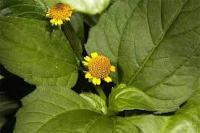
This study aimed to develop and evaluate a stable oil-in-water (O/W) topical cream incorporating a polyphenol-rich extract from Spilanthes acmella Murr. (S. acmella), a plant recognized for its antioxidant potential. The extract, obtained via reflux extraction with 80% ethanol, demonstrated notable free radical scavenging activity in the DPPH (2,2-diphenyl-1-picrylhydrazyl) assay, exhibiting an IC₅₀ (Inhibitory concentration 50) value of 563.26 µg/mL. The cream was prepared using the hot emulsification method. Formulation variables, including oil phase concentration and composition (olive oil and cetyl alcohol), the emulsifier system (Tween 80/Span 80 blend), stirring duration, and humectant type, were systematically optimized to achieve the desired physicochemical stability and aesthetic properties. The optimized formulation contained 10% S. acmella extract, a 15% oil phase, a 10% emulsifier mix, and 10% glycerin. Three pilot batches were produced, all yielding a smooth, homogeneous, grayish-green cream with a pH of 5.69 ± 0.20, which is consistent with the physiological pH of human skin. The cream demonstrated good stability under stress conditions, excellent spreadability (29.87 ± 0.33 cm²), and a consistent total polyphenol content of 56.82 ± 0.69 mg gallic acid equivalents per gram. Microbial limit tests confirmed the product’s microbiological safety, and in vivo dermal irritation tests in rabbits (ISO 10993-10) showed no signs of skin irritation. Overall, the formulated cream was found to be stable, safe, and rich in antioxidant compounds, suggesting its potential as a promising dermo-cosmetic product.
Downloads
Article Details
Section

This work is licensed under a Creative Commons Attribution-NonCommercial-NoDerivatives 4.0 International License.
How to Cite
References
1.Ribeiro AS, Estanqueiro M, Oliveira MB, Sousa Lobo JM. Main benefits and applicability of plant extracts in skin care products. Cosmet. 2015; 2(2):48-65.
2.Nguyen T, Le T, Tran Q. Medicinal plants used in traditional Vietnamese medicine for skin diseases: A review. J Ethnopharmacol. 2018; 220:1-18.
3.Vishwanathan S, Nandan N, Anitha C, Manjushree R, Sunil Raj N. The buzz button to your toothache – Spilanthes acmella: a review. J Ayurveda Integr Med Sci. 2021; 6(2):77-81. Doi:10.21760/jaims.v6i02.1250.
4.Rahim RA, Jayusman PA, Muhammad N, Mohamed N, Lim V, Ahmad NH, Mohamad S, Abdul Hamid ZA, Ahmad F, Mokhtar N, Shuid AN, Mohamed IN. Potential antioxidant and anti-inflammatory effects of Spilanthes acmella and its health beneficial effects: a review. Int J Environ Res Public Health. 2021;18(7):3532. Doi:10.3390/ijerph18073532.
5.Aktar MA, Bhuia MS, Molla S, Chowdhury R. Pharmacological and phytochemical review of Acmella oleracea: a comprehensive analysis of its therapeutic potential. SN Appl Sci. 2024; 6(8):412. Doi:10.1007/s42452-024-06108-5.
6.Singh M, Chaturvedi R. An appraisal on in vitro conservation and biotechnological interventions in Spilanthes acmella Murr. In: Singh M, Kapoor R, Kaul M, Kaur I, eds. Plant reproductive biology and conservation. New Delhi: I.K. International Publishing House; 2014: 299-319.
7.Turcov D, Trifan A, Puitel AC, Cimpoesu R, Zbranca-Toporas A, Maxim C, Suteu D, Barna AS. Preliminary studies about valorization of Acmella oleracea bioactive content in modern dermato-cosmetic applications to combat skin oxidative stress. Int J Mol Sci. 2024; 25(16):8886-8901. Doi:10.3390/ijms25168886.
8.Yadav R, Sharma R, Saxena K. Spilanthes acmella: ethnobotanical and pharmacological activities. Int J Pharm Sci Rev Res. 2023; 78(2):17-24.
9.Nguyen TA, Tran TT, Truong DT, Nguyen NN. Extraction process of Spilanthes acmella (Asteraceae) extract. HIU J Sci. 2024; Special Issue 1:316-324.
10.Gulçin I, Alwasel SH. DPPH radical scavenging assay. Process. 2023; 11(8):2248–2258. Doi:10.3390/pr11082248.
11.Afzal A, Mumtaz A, Shah NH, Qureshi N. Preparation of Spilanthes acmella-based emulgel: antimicrobial study and evaluation. Pak J Pharm Sci. 2022; 35(1):287–295. Doi:10.36721/PJPS.2022.35.1.SUP.287-295.1.
12.Afzal A, Shah NH, Javed H, Saeed J. Spilanthes acmella extract-based natural oils loaded emulgel for antimicrobial action against dermatitis. Gels. 2023; 9(10):832–846. Doi:10.3390/gels9100832.
13.Hue PTM. Pharmaceutics and Biopharmaceutics 2. Hanoi: Medical Publishing House; 2025:11-65.
14.Nipate SS, Tiwari AH. Antioxidant and immunomodulatory properties of Spilanthes oleraceae with potential effect in chronic fatigue syndrome infirmity. J Ayurveda Integr Med. 2020; 11(2): 124-130.
15.Tran TH, Hai T, Thuy N. Preparation and SPF evaluation of sunscreen cream containing titanium dioxide. VNU J Sci Med Pharm Sci. 2019; 35(1):1–18. Doi:10.25073/2588-1132/vnumps.4153.
16.Vietnamese Pharmacopoeia Commission. Vietnamese Pharmacopoeia V. Hanoi: Medical Publishing House; 2017.
17.Ali SM, Yosipovitch G. Skin pH: from basic science to basic skin care. Acta Derm Venereol. 2013; 93(3): 261-267.
18.Domínguez-López I, Pérez M, Lamuela-Raventós RM. Total polyphenol analysis by the Folin–Ciocalteu assay as an anti-inflammatory biomarker in biological samples. Crit Rev Food Sci Nutr. 2024; 64(27):10048–10054. Doi:10.1080/10408398.2023.2220031.
19.ICH Harmonised Tripartite Guideline. Q1A(R2): Stability Testing of New Drug Substances and Products. International Council for Harmonisation; 2003.
20.International Organization for Standardization. ISO 10993-10:2010 Biological evaluation of medical devices — Part 10: Tests for irritation and skin sensitization. ISO; 2010.
21.Prachayasittikul V, Prachayasittikul S, Ruchirawat S, Prachayasittikul V. High therapeutic potential of Spilanthes acmella: a review. EXCLI J. 2013;12:291-312.
22.Yenny SW, Suryani YE. Polyphenols as natural antioxidants in skin aging. Trop J Nat Prod Res. 2020; 4(8):346–351.
23.Draelos ZD. The science behind skin care: Moisturizers. J Am Acad Dermatol. 2018; 78(1 Suppl 1):S1-S20.