


Synergistic Antiproliferative Effects of Garcinia cowa Ethyl-Acetate Fraction Combined with Paclitaxel in T47D Breast Cancer Cells
Article Sidebar
Views | PDF/EPUB Downloads:
0
/ 0
/ 0
Main Article Content
Abstract
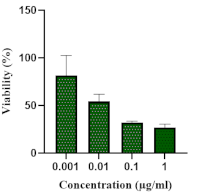
Breast cancer therapy is often faces drug resistance and chemotherapeutic side effects with agents, -such as paclitaxel. A combination approach with natural agents may enhance therapeutic efficacy and reduce toxicity. This study aimed to assess the cytotoxic activity of the ethyl acetate fraction of Garcinia cowa leaves (EAGCL) against T47D breast cancer cells and to quantify the synergistic interaction between EAGCL and paclitaxel. T47D cells were treated with various concentrations of the ethyl acetate fraction of Garcinia cowa leaves (EAGCL; 0.1–100 µg/mL) and paclitaxel (0.001–1 µg/mL), either individually or in combination. Viability was assessed using the 3-(4,5-dimethylthiazol-2-yl)-2,5-diphenyltetrazolium bromide (MTT) assay. The IC50 was determined, and interactions were analysed using the Chou–Talalay method with CompuSyn software to obtain the Fraction Affected (Fa), Combination Index (CI), and Concentration Reduction Index. The IC50 of EAGCL and paclitaxel against T47D were 14.83 µg/mL and 0.014 µg/mL, respectively. The sub-IC50 combination (EAGCL 15–30 µg/mL + paclitaxel 0.00175 µg/mL) produced Fa 0.68–0.82 and CI 0.28–0.59, indicating moderate to strong synergism. Concentration (Dose) Reduction Index showed the potential for a 17-fold reduction in paclitaxel concentration in the optimal combination and a 3–4-fold reduction in EAGCL concentration. The combination of EAGCL with paclitaxel demonstrated significant synergism in vitro in T47D cells, suggesting the potential to reduce the paclitaxel concentration. Further studies are needed such as apoptosis assays, cell cycle analysis, and evaluation of apoptosis/survival-related protein expression—to confirm the mechanism of action and safety.
Downloads
Article Details
Section

This work is licensed under a Creative Commons Attribution-NonCommercial-NoDerivatives 4.0 International License.
How to Cite
References
1.Wang J, Wu SG. Breast Cancer: An Overview of Current Therapeutic Strategies, Challenge, and Perspectives. Breast Cancer: Targets Ther. 2023; 15:721–730.
2.Marra A, Trapani D, Viale G, Criscitiello C, Curigliano G. Practical Classification of Triple-Negative Breast Cancer: Intratumoral Heterogeneity, Mechanisms of Drug Resistance, and Novel Therapies. NPJ Breast Cancer. 2020; 6(1):1–16.
3.Wahyuni FS, Putri DE, Putra YU, Hamidi D. Cytotoxic Activity of Taxus Sumatrana (Miq.) De Laub. Bark, Leaves, and Shoots on Hela, T47D, and MCF-7/HER2 Cell Lines. Int J App Pharm. 2024; 16:93–98.
4.Testa U, Castelli G, Pelosi E. Breast cancer: a Molecularly Heterogenous Disease Needing Subtype-Specific Treatments. Med Sci. 2020; 8(1):1-18.
5.Klein I, Lehmann HC. Pathomechanisms of Paclitaxel‐Induced Peripheral Neuropathy. Toxics. 2021; 9(10):1–13.
6.Tay N, Laakso EL, Schweitzer D, Endersby R, Vetter I, Starobova H. Chemotherapy-Induced Peripheral Neuropathy in Children and Adolescent Cancer Patients. Front Mol Biosci. 2022; 9:1–27.
7.Lin SR, Chang CH, Hsu CF, Tsai MJ, Cheng H, Leong MK, Sung PJ, Chen JC, Weng CF. Natural Compounds as Potential Adjuvants to Cancer Therapy: Preclinical Evidence. Br J Pharmacol. 2020; 177(6):1409–1423.
8.Correia AS, Gärtner F, Vale N. Drug Combination and Repurposing for Cancer Therapy: the Example of Breast Cancer. Heliyon. 2021; 7(1):1-9.
9.Castañeda AM, Meléndez CM, Uribe D, Pedroza-Díaz J. Synergistic Effects of Natural Compounds and Conventional Chemotherapeutic Agents: Recent Insights for the Development of Cancer Treatment Strategies. Heliyon. 2022; 8(6):1-15.
10. Ifora I, Hamidi D, Susanti M, Hefni D, Wahyuni FS. Enhancing Chemotherapeutic Efficacy: Synergistic Cytotoxic Effect of Garcinia cowa Bark Extract and Doxorubicin in T47D Breast Cancer Cells. Trop J Nat Prod Res. 2025; 9:67–72.
11. Hefni, D., Dachriyanus, W.F., Yerizel, E., Arisanty, D. and Yusra LN. Cowanin, a Cytotoxic Xanthone from Asam Kandis (Garcinia cowa, Roxb.) Reduced Cell Migration and Induced Cell Cycle Arrest on T47D Human Cancer Cell. Int J Adv Sci. 2020; 10(5):2164-2169.
12. Rahman MZ, Karim MM, Rahman MM, Raziuddin, Islam MR, Talukder MM, Akhter MS, Khatun F. Fruit Rot of cowa (Garcinia cowa): A New Disease Record from Bangladesh. Indian Phytopathol. 2022;75(2): 591-594.
13. Chouni A, Pal A, Gopal PK, Paul S. GC-MS Analysis and Screening of Anti-Proliferative Potential of Methanolic Extract of Garcinia Cowa on Different Cancer Cell Lines. Pharmacogn J. 2021; 13(2):34-44.
14. Sriyatep T, Maneerat W, Sripisut T, Cheenpracha S, Machan T, Phakhodee W, Laphookhieo S. Cowabenzophenones A and B, two new tetracyclo [7.3. 3.33, 11.03, 7] tetradecane-2, 12, 14-trione Derivatives, from Ripe Fruits of Garcinia cowa. Fitoterapia. 2014; 92:285-289.
15. Hefni D, Dachriyanus, Nahda AM, Wahyuni FS. Effect of Cowanin on Cyclin D1 Expression in MCF-7/HER2 Breast Cancer Cells. Int J App Pharm. 2024; 16:149–151.
16. Paudel HR, Thapa R, Poudel P. Garcinia cowa Roxb. ex Choisy. In Himalayan Fruits and Berries. Aca Press. 2023; 1:197-203.
17. Pattamadilok C. Xanthones from Garcinia cowa Flowers and Their Cytotoxicity. Thai J Phar Sci. 2016; 31:40-48.
18. Xu G, Kan WL, Zhou Y, Song JZ, Han QB, Qiao CF, Cho CH, Rudd JA, Lin G, Xu HX. Cytotoxic Acylphloroglucinol Derivatives from The Twigs of Garcinia cowa. J Nat Prod. 2010; 73(2):104-108.
19. Chowchaikong N, Nilwarangkoon S, Laphookhieo S, Tanunyutthawongse C, Watanapokasin R. p38 Inhibitor Inhibits the Apoptosis of Cowanin-Treated Human Colorectal Adenocarcinoma Cells. Int J Oncol. 2018; 52(6):2031-2040.
20. Wahyuni FS, Syafri S, Permatasari D, Hefni D, Hamidi D, Nomiza NA, Rezti IA. Cowanin Induces Apoptosis in Breast Cancer Cells via Bcl-2 Signaling Pathway. J Integr Complement Med. 2023; 20(3):631-636.
21. Punpai S, Saenkham A, Jarintanan F, Jongrungruangchok S, Choowongkomon K, Suksamrarn S, Tanechpongtamb W. HDAC Inhibitor Cowanin Extracted from G. Fusca Induces Apoptosis and Autophagy via Inhibition of the PI3K/Akt/Mtor Pathways in Jurkat Cells. Biomed Pharmacother. 2022; 147:1-13.
22. Xia Z, Zhang H, Xu D, Lao Y, Fu W, Tan H, Cao P, Yang L, Xu H. Xanthones from the Leaves of Garcinia cowa Induce Cell Cycle Arrest, Apoptosis, and Autophagy in Cancer Cells. Molecules. 2015; 20(6):11387-11399.
23. Husni E, Nahari F, Wirasti Y, Wahyuni FS, Dachriyanus H. Cytotoxicity Study of Ethanol Extract of The Stem Bark of Asam Kandis (Garcinia cowa Roxb.) on T47D Breast Cancer Cell Line. Asian Pac J Trop Biomed. 2015; 5(3):249–252.
24. Furqan M, Dachriyanus, Susanti M, Putra PP, Wahyuni FS. Unravelling the Interaction between Garcinisidone-A and HER2 Protein In Breast Cancer: A Computational Study. Int J App Pharm. 2024; 16:99–104.
25. Wahyuni FS, Shaari K, Stanslas J, Lajis NH, Dachriyanus D. Cytotoxic Xanthones from the Stem Bark of Garcinia cowa Roxb. J Chem Pharm Res. 2015; 7(1):227–236.
26. Jena BS, Jayaprakasha GK, Sakariah KK. Organic Acids from Leaves, Fruits, and Rinds of Garcinia cowa. J Agric Food Chem. 2002; 50(12):3431–3434.
27. Wahyuni FS, Shaari K, Stanslas J, Lajis N, Hamidi D. Cytotoxic Compounds from the Leaves of Garcinia cowa Roxb. J App Pharm Sci. 2015; 5(2):6-11.
28. Ifora I, Rahmaddian T. Antioxidant Potential of Garcinia cowa Roxb.: A Review. Int J Phar Sci Med. 2022; 9(7):20-26.
29. Nami B, Maadi H, Wang Z. Mechanisms Underlying the Action and Synergism of Trastuzumab and Pertuzumab in Targeting HER2-Positive Breast Cancer. Cancers (Basel). 2018; 10(10):1-12.
30. Langdon SP, Langdon SP. Cancer Cell Culture. Springer; 2003; 21-55.
31. Saxe DF, May KM, Priest JH. General Cell Culture Principles and Fibroblast Culture. The AGT Cytogenetics Laboratory Manual. 2017;119–172.
32. Coecke S, Balls M, Bowe G, Davis J, Gstraunthaler G, Hartung T, Hay R, Merten OW, Price A, Schechtman L, Stacey G. Guidance on Good Cell Culture Practice: A Report of the Second ECVAM Task Force on Good Cell Culture Practice. Alter Lab Anim. 2005; 33(3):261–287.
33. Engel N, Oppermann C, Falodun A, Kragl U. Proliferative Effects of Five Traditional Nigerian Medicinal Plant Extracts on Human Breast and Bone Cancer Cell Lines. J Ethnopharmacol. 2011; 137(2):1003–1010.
34. Rahmawati N, Ismail NH, Wahyuni FS, Hamidi D. Cytotoxic Activity Screening of Various Uncaria Spp Plants on T47d Breast Cancer. Trop J Nat Prod Res. 2023; 7:2218–2221.
35. Satria D, Silalahi J, Haro G, Ilyas S, Hasibuan PAZ. Cell Cycle Inhibition of Ethylacetate Fraction of Zanthoxylum acanthopodium DC. Fruit Against T47D Cells. Open Access Maced J Med Sci. 2019; 7(5):726–729.
36. Furqan M, Wahyuni FS, Susanti M, Hamidi D. Evaluation of Garcinia cowa Leaf Extract as A Potential Anticancer Agent: Cytotoxicity, Selectivity, and Apoptotic Effects on MCF-7/HER-2 Cells. Trop J Nat Prod Res. 2025; 9(2):846–852.
37. Falodun A, Engel N, Kragl U, Nebe B, Langer P. Novel Anticancer Alkene Lactone from Persea americana. Pharm Biol. 2013; 51(6):700–706.
38. Chou TC. Drug Combination Studies and Their Synergy Quantification Using the Chou-Talalay Method. Cancer Res. 2010; 70(2):440–446.
39. Banerjee V, Sharda N, Huse J, Singh D, Sokolov D, Czinn SJ, Blanchard TG, Banerjee A. Synergistic Potential of Dual Andrographolide and Melatonin Targeting of Metastatic Colon Cancer Cells: Using the Chou-Talalay Combination Index Method. Eur J Pharmacol. 2021; 897:21-35.
40. Plana D, Palmer AC, Sorger PK. Independent Drug Action in Combination Therapy: Implications for Precision Oncology. Cancer Discov. 2022; 12(3):606–624.
41. Chakravarty M, Ganguli P, Murahari M, Sarkar RR, Peters GJ, Mayur YC. Study of Combinatorial Drug Synergy of Novel Acridone Derivatives with Temozolomide Using in-silico and in-vitro Methods in the Treatment of Drug-Resistant Glioma. Front Oncol. 2021; 11(3):1–19.
42. Rahman AU, Panichayupakaranant P. Exploring the Diverse Biological Activities of Garcinia Cowa: Implications for Future Cancer Chemotherapy and Beyond. Food Biosci. 2024; 61:22-30.
43. Mahabusarakam W, Chairerk P, Taylor WC. Xanthones from Garcinia cowa Roxb. Latex. Phytochemistry. 2005; 66(10):1148–1153.
44. Ritthiwigrom T, Laphookhieo S, Pyne SG. Chemical Constituents and Biological Activities of Garcinia cowa Roxb. Maejo Int. J. Sci. Technol. 2013; 7(02):212-231.
45. Agu KC, Okolie NP, Falodun A, Engel-Lutz N. In Vitro Anticancer Assessments of Annona Muricata Fractions and In Vitro Antioxidant Profile of Fractions and Isolated Acetogenin (15-acetyl guanacone). J Cancer Res Pract. 2018; 5(2):53-66.
46. Sands CJ, Gomez-Romero M, Correia G, Chekmeneva E, Camuzeaux S, Izzi-Engbeaya C, Dhillo WS, Takats Z, Lewis MR. Representing the Metabolome with High Fidelity: Range
and Response as Quality Control Factors in LC-MS-Based Global Profiling. Anal Chem. 2021; 93(4):1924-1933.
47. Dewi IP, Wahyuni FS, Aldi Y, Ismail NH, Dachriyanus. In Vitro Immunomodulatory Activity Study of Garcinia cowa Roxb. Fraction. J Complement Integr Med. 2023; 20(2):365-371.
48. Putri RH, Soetrisno, Wasita B, Priyanto H, Pamungkasari EP, Cilmiaty R. Investigating the Effects of the Ethyl Acetate Fraction of Mas Banana Bracts: Suppressing Cell Growth, Promoting Cell Death, and Targeting Specific Molecules in Hela Cells. Trop J Nat Prod Res. 2024; 8(11):9035–9042.
49. Reynolds CP, Maurer BJ. Evaluating Response to Antineoplastic Drug Combinations in Tissue Culture Models. Chemosensitivity: Volume 1 In Vitro Assays. 2005; 110(2):173–183.
50. Zhao, Wientjes MG, Au JLS. Evaluation of Combination Chemotherapy: Integration of Nonlinear Regression, Curve Shift, Isobologram, and Combination Index Analyses. Clin Cancer Res. 2004; 10(23):7994–8004.
51. Palmer AC, Sorger PK. Combination Cancer Therapy can Confer Benefit Via Patient-to-Patient Variability without Drug Additivity or Synergy. Cell. 2017; 171(7):1678-1691.
52. Jones LB, Secomb TW, Dewhirst MW, El-Kareh AW. The Additive Damage Model: A Mathematical Model for Cellular Responses to Drug Combinations. J Theor Biol. 2014; 357:10-20.
53. Le C. Experiment Designs for the Assessment of Drug Combination Synergism. Austin Biom Biostat. 2014; 1(2):1–6.
54. Fantini M, Benvenuto M, Masuelli L, Frajese GV, Tresoldi I, Modesti A, Bei R. In vitro and In Vivo Antitumoral Effects of Combinations of Polyphenols, or Polyphenols and Anticancer Drugs: Perspectives on Cancer Treatment. Int J Mol Sci. 2015; 16(5):9236–9282.
55. Chou TC. The combination index (CI< 1) as the Definition of Synergism and of Synergy Claims. Synergy. 2018; 7:49-50.
56. Chou TC, Shapiro TA, Fu J, Chou JH, Ulrich-Merzenich GS. Computerized Quantification of Drugs Synergism in Animal Studies or in Clinical Trials Using Only Ten Data Points. Synergy. 2019; 9:10-19.
57. Liu RH. Potential Synergy of Phytochemicals in Cancer Prevention: Mechanism of Action. The J Nutr. 2004; 134(12):79-85.
58. Kamran S, Sinniah A, Chik Z, Alshawsh MA. Diosmetin Exerts Synergistic Effects in Combination with 5-Fluorouracil in Colorectal Cancer Cells. Biomed. 2022; 10(3):21-29.
59. Banerjee V, Sharda N, Huse J, Singh D, Sokolov D, Czinn SJ, Blanchard TG, Banerjee A. Synergistic Potential of Dual Andrographolide and Melatonin Targeting of Metastatic Colon Cancer Cells: Using the Chou-Talalay Combination Index Method. Eur J Pharm. 2021; 897:173-181.
60. Elwakeel A, Soudan H, Eldoksh A, Shalaby M, Eldemellawy M, Ghareeb D, Abouseif M, Fayad A, Hassan M, Saeed H. Implementation of the Chou-Talalay Method for Studying the In Vitro Pharmacodynamic Interactions of Binary and Ternary Drug Combinations on MDA-MB-231 Triple Negative Breast Cancer Cells. Synergy. 2019; 8:100-117.
61. Zhang, Fu JN, Chou TC. Synergistic Combination of Microtubule Targeting Anticancer Fludelone with Cytoprotective Panaxytriol Derived from Panax Ginseng Against MX-1 Cells In Vitro: Experimental Design and Data Analysis Using the Combination Index Method. Am J Cancer Res. 2016; 6(1):97–104.
62. Yan-Hua YA, Jia-Wang MA, Xiao-Li TA. Research Progress on the Source, Production, and Anti-Cancer Mechanisms of Paclitaxel. Chin J Nat Med. 2020; 18(12):890-897.
63. Baguley BC, Marshall ES, Whittaker JR, Dotchin MC, Nixon J, McCrystal MR, Finlay GJ, Matthews JH, Holdaway KM, Van Zijl P. Resistance Mechanisms Determining the In Vitro Sensitivity to Paclitaxel of Tumour Cells Cultured From Patients With Ovarian Cancer. Eur J Cancer. 1995; 31(2):230-237.
64. Ligresti A, De Petrocellis L, Di Marzo V. From Phytocannabinoids to Cannabinoid Receptors and Endocannabinoids: Pleiotropic Physiological and Pathological Roles through Complex Pharmacology. Physiol Rev. 2016; 96(4):1593–1659.
65. Erharuyi O, Simanski S, Osemwota OF, Erharuyi ED, Imieje VO, Ogbeide KO, Falodun A. Cassane Diterpenoids and Derivatives Isolated from Caesalpinia pulcherrima with Selective Cytotoxic Activity against Multiple Myeloma Cells. Pharm Res Nat Prod. 2025; 8:1-6.