


Phytochemical and Antioxidant Profile of the Ethanol Extracts of Phyllanthus niruri and Bergenia ligulata
Article Sidebar
Views | PDF/EPUB Downloads:
0
/ 0
/ 0
Main Article Content
Abstract
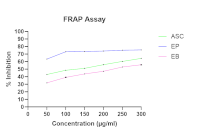
Cells produce free radicals that act as signaling molecules but also cause cellular damage, leading to oxidative stress and disease progression. Endogenous antioxidants offer protection, yet their limited levels are often inadequate against reactive oxygen species (ROS). In contrast, natural antioxidants provide more effective defense with better biocompatibility and fewer side effects than synthetic ones. Among medicinal plants, Phyllanthus niruri (PN) and Bergenia ligulata (BL) are traditionally valued for their therapeutic properties in managing diverse health disorders. The present study aimed to evaluate the phytochemical composition and antioxidant capacity of ethanolic extracts derived from PN leaves and BL rhizomes. Extracts were prepared by Soxhlet extraction method, and subsequently analyzed for total phenolic and flavonoid contents, along with antioxidant activity. Quantitative phytochemical analysis revealed that PN and BL extracts contained substantial phenolic contents (290 ± 0.03 mg GAE/g and 240 ± 0.04 mg GAE/g, respectively) and flavonoid contents (56.09 ± 0.48 mg RUT/g and 58.80 ± 0.84 mg RUT/g, respectively). Antioxidant assays demonstrated marked activity, with PN and BL exhibiting ferric reducing antioxidant power (FRAP) values of 65.96 ± 0.48% and 62.04 ± 0.07%, respectively, and DPPH radical scavenging activities of 71.57 ± 0.06% and 75.60 ± 0.50%, respectively. No significant differences (P < 0.05) were observed between the antioxidant activities of both extracts and that of ascorbic acid (77.49 ± 0.13% for DPPH and 64.35 ± 0.07% for FRAP). These findings strongly support the potential application of PN leaves and BL rhizomes in mitigating oxidative stress-related disorders.
Downloads
Article Details
Section

This work is licensed under a Creative Commons Attribution-NonCommercial-NoDerivatives 4.0 International License.
How to Cite
References
1.Siddiqi HS, Rehman NU, Farooq J. Role of Complementary and Alternative Medicine in Management of Oxidative Stress. Fundam Princ Oxid Stress Metab Reprod: Prev Manag. J. 2024; 317(1):317-335.
2.Ezzat MI, Okba MM, Ahmed SH, El-Banna HA, Prince A, Mohamed SO, Ezzat SM. In-depth Hepatoprotective Mechanistic Study of Phyllanthus niruri: In Vitro and In Vivo Studies and Its Chemical Characterization. PloS One. 2020; 15(1):1-23.
3.Hasan M, Safarianti S, Ramadhani AF, Khilfi S, Suryawati S, Husna F. Bioactive Compounds and In Vitro Evaluation of Phyllanthus niruri Extract as Antioxidant and Antimicrobial Activities. J Trends Sci. 2024; 21(2):7130-7130.
4.Nadeem M, Zarreen F, Rizvi MMA. GC-MS Analysis of Phytochemical Composition and Anticancer Activities of Methanol and Aqueous Extracts of Bergenia ligulata Rhizome. J Food Sci Technol. 2025; 62(4):623-634.
5.Lee NY, Khoo WK, Adnan MA, Mahalingam TP, Fernandez AR, Jeevaratnam K. The Pharmacological Potential of Phyllanthus niruri. J Pharm Pharmacol. 2016; 68(8):953-969.
6.Bose Mazumdar Ghosh A, Banerjee A, Chattopadhyay S. An Insight into the Potent Medicinal Plant Phyllanthus amarus Schum. and Thonn. The Nucleus. 2022; 65(3):437-472.
7.Nwanjo HU, Oze G, Okafor MC, Nwosu D, Nwankpa P. Protective Role of Phyllantus niruri Extract on Serum Lipid Profiles and Oxidative Stress in Hepatocytes of Diabetic Rats. Afr J Biotechnol. 2022; 6(15):1744-1749.
8.Ru Q, Li Y, Chen L, Wu Y, Min J, Wang F. Iron Homeostasis and Ferroptosis in Human Diseases: Mechanisms and Therapeutic Prospects. Signal Transduct Target Ther. 2024; 9(1):271.
9.Malecki EA and Connor JR. The Case for Iron Chelation and/or Antioxidant Therapy in Alzheimer's Disease. Drug Dev Res. 2002; 56(3):526-530.
10.Roychoudhury S, Das D, Das S, Jha NK, Pal M, Kolesarova A, Kesari KK, Kalita JC, Slama P. Clinical Potential of Himalayan Herb Bergenia ligulata: An Evidence-based Study. Molecules. 2022; 27(20):7039.
11.Sajad T, Zargar A, Ahmad T, Bader GN, Naime M, Ali S. Antibacterial and Anti-inflammatory Potential Bergenia ligulata. Am J Biomed Sci. 2010; 2(4):313-321.
12.Aggarwal D, Kaushal R, Kaur T, Bijarnia RK, Puri S, Singla SK. The Most Potent Antilithiatic Agent Ameliorating Renal Dysfunction and Oxidative Stress from Bergenia ligulata Rhizome. Ethnopharmacol. 2014; 158:85-93.
13.Singh A, Tandon S, Nandi SP, Kaur T, Tandon C. Downregulation of Inflammatory Mediators by Ethanolic Extract of Bergenia ligulata (Wall.) in Oxalate Injured Renal Epithelial Cells. J Ethnopharmacol. 2021; 275:114104.
14.Rolta R, Goyal M, Sharma S, Bharaj D, Salaria D, Upadhyay NK, Lal UR, Dev K, Sourirajan A. Bioassay Guided Fractionation of Phytocompounds from Bergenia ligulata: A Synergistic Approach to Treat Drug Resistant Bacterial and Fungal Pathogens. Pharm Res – Modern Chin Med. 2022; 3:100076.
15.Chew Y and Lim Y. Evaluation and Comparison of Antioxidant Activity of Leaves, Pericarps and Pulps of Three Garcinia Species in Malaysia. Free Rad Antioxid. 2018; 8(2):130-134.
16.Singh M, Pandey N, Agnihotri V, Singh KK, Pandey A. Antioxidant, Antimicrobial Activity and Bioactive Compounds of Bergenia ciliata Sternb.: A Valuable Medicinal Herb of Sikkim Himalaya. J Tradit. Integr. Med. 2017; 7(2):152-157.
17.Islam MN, Shoeb M, Nahar N. Biological Activity Studies of the Aerial Parts of Phyllanthus niruri L. Curr Res Biosci Biotechnol. 2022; 4(1):251-255.
18.Rajamanickam G and Manju SL. Identification and Comparative Study of Invitro Antioxidant Potential of Fractionated Hydroalcoholic Extract of Phyllanthus niruri Linn. Eur J Inorg Chem. 2020; 1(1):1-8.
19.Gallia MC, Ferrari A, Bajda L, Bongiovanni GA. Antioxidant Activity and Phenolic Content of Herbal Infusions from Medicinal Plants Used in Argentina. J Food Prod Proc Nutr. 2024; 6(1):45.
20.Okoduwa SI, Abdulwaliyu I, Igiri BE, Arekemase SO, Okoduwa UJ, Itiat JF, Egbule MN, Mustapha RA. Multi-therapeutic Potential of Flavonoids as an Essential Component in Nutraceuticals for the Treatment and Management of Human Diseases. J Phytomed Plus. 2024; 4(2):100558.
21.Upadhyay R, Jha A, Singh SP, Kumar A, Singh M. Appropriate Solvents for Extracting Total Phenolics, Flavonoids and Ascorbic Acid from Different Kinds of Millets. J Food Sci Technol. 2015; 52:472-478.
22.Singh M, Jha A, Kumar A, Hettiarachchy N, Rai AK, Sharma D. Influence of the Solvents on the Extraction of Major Phenolic Compounds (Punicalagin, Ellagic Acid and Gallic Acid) and Their Antioxidant Activities in Pomegranate Aril. J Food Sci Technol. 2014; 51:2070-2077.
23.Nimmi I, Jahan IA, Hossain MH, Uddin MB, Rana MS, Haq MM. A Comparative Study on Antioxidant Properties of Two Phyllanthus Species Growing in Bangladesh. Dhaka Univ J Pharm Sci. 2012; 11(2):191-197.