


Molecular Docking Study of Moringin against Inflammatory and Oxidative Stress-Related Targets: Insights into Its Immunomodulatory Potential
Article Sidebar
Views | PDF/EPUB Downloads:
0
/ 0
/ 0
Main Article Content
Abstract
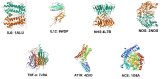
Moringin, an isothiocyanate derived from Moringa oleifera, has demonstrated notable pharmacological properties, including antiinflammatory and antioxidant activities. This study aimed to assess the immunomodulatory potential of moringin through molecular docking analyses targeting key proteins involved in inflammatory and oxidative stress pathways, including IL-6, IL-12, Nrf2, NOS, TNF-α, AT1R, and ACE. The three-dimensional structures of the target proteins were retrieved from the Protein Data Bank. Molecular docking was carried out using AutoDock Tools 1.5.6, and the resulting interactions were visualized by BIOVIA Discovery Studio Visualizer 24.1. The evaluation encompassed binding affinity, interactions with active residues, as well as ADME and toxicity assessments conducted using SwissADME and ProTox. Moringin demonstrated stronger binding affinities, reflected by more negative values than the native ligands across several receptors, including IL-12, Nrf2, NOS, and ACE. Among these, the most favorable binding was observed with the NOS receptor (−6.18 ± 0.182 kcal/mol), suggesting a stable and potent interaction with this target. Furthermore, the ADME analysis revealed good bioavailability and the absence of toxicity toward major organs, including the liver, nervous system, and immune system. Moringin also fulfilled the Lipinski`s criteria (molecular weight <500 Da, <5 hydrogen bond donors, <10 hydrogen bond acceptors, a log P<5, <10 rotatable bonds, and TPSA <140 Å) indicating its potential as a pharmacologically active compound. Overall, Moringin appears to hold considerable potential as a natural immunomodulatory and antioxidant agent. Nevertheless, additional validation through in vitro and in vivo studies is essential to substantiate these findings.
Downloads
Article Details
Section

This work is licensed under a Creative Commons Attribution-NonCommercial-NoDerivatives 4.0 International License.
How to Cite
References
1. Wang X, Chen L, Wei J, Zheng H, Zhou N, Xu X. The Immune System in Cardiovascular Diseases: From Basic Mechanisms to
Therapeutic Implications. Signal Transduct Target Ther. 2025; 10(1):166.
2. Blanco LP and Kaplan MJ. Metabolic Alterations of the Immune System in the Pathogenesis of Autoimmune Diseases. PLoS Biol. 2023; 21(4):1–13.
3. Zhang H and Dhalla NS. The Role of Pro-Inflammatory Cytokines in the Pathogenesis of Cardiovascular Disease. Int J Mol Sci. 2024; 25(2):1082.
4. Silva GM, França-Falcão MS, Calzerra NTM, Luz MS, Gadelha DDA, Balarini CM. Role of Renin-Angiotensin System Components in Atherosclerosis: Focus on Ang-II, ACE2, and Ang-1–7. Front Physiol. 2020; 11(1067):3–10.
5. Tomasik AM and PJ. A New Perspective on the Renin-Angiotensin System. Diagnostics 2023; 13(16):1–12.
6. Pareek A, Pant M, Gupta MM, Kashania P, Ratan Y, Jain V. Moringa oleifera: An Updated Comprehensive Review of Its Pharmacological Activities, Ethnomedicinal, Phytopharmaceutical Formulation, Clinical, Phytochemical, and Toxicological Aspects. Int J Mol Sci. 2023; 24(2089):1-36.
7. Lopez-Rodriguez NA, Gaytán-Martínez M, de la Luz Reyes-Vega M, Loarca-Piña G. Glucosinolates and Isothiocyanates From Moringa oleifera: Chemical and Biological Approaches. Plant Foods Hum Nutr. 2020; 75(4):447–457.
8. Zhang H, Unal H, Desnoyer R, Han GW, Patel N, Katritch V. Structural Basis for Ligand Recognition and Functional Selectivity at Angiotensin Receptor. J Biol Chem. 2015; 290(49):29127–29139.
9. Salman HA, Yaakop AS, Aladaileh S, Mustafa M, Gharaibeh M, Kahar UM. Inhibitory Effects of Ephedra alte on IL-6, Hybrid TLR4, TNF-α, IL-1β, and Extracted TLR4 Receptors: In Silico Molecular Docking. Heliyon. 2023; 9(1):1-9.
10. Glassman CR, Mathiharan YK, Jude KM, Su L, Panova O, Lupardus PJ. Structural Basis for IL-12 and IL-23 Receptor Sharing Reveals a Gateway for Shaping Actions on T Versus NK Cells. Cell. 2021; 184(4):900-914.
11. Prasetiawati R, Febrianti EN, Hamdani S, Ikram NKK, Fakih TM, Novitasari D. Alpha-Mangostin From Garcinia mangostana L.: A Potential Nrf2 Inhibitor for Long COVID-19 Explored Through Molecular Dynamics. J Pharm Pharmacogn Res. 2025; 13(2):381–392.
12. Madariaga-Mazõn A, Hernández-Abreu O, Estrada-Soto S, Mata R. Insights on the Vasorelaxant Mode of Action of Malbrancheamide. J Pharm Pharmacol. 2015; 67(4):551–558.
13. Velmurugan Y, Chakkarapani N, Natarajan SR, Jayaraman S, Madhukar H, Venkatachalam R. PPI Networking, In-Vitro Expression Analysis, Virtual Screening, DFT, and Molecular Dynamics for Identifying Natural TNF-α Inhibitors for Rheumatoid Arthritis. Mol Divers. 2025.
14. Xu Y, Al-Mualm M, Terefe EM, Shamsutdinova MI, Opulencia MJC, Alsaikhan F. Prediction of COVID-19 Manipulation by Selective ACE Inhibitory Compounds of Potentilla reptans Root: In Silico Study and ADMET Profile. Arab J Chem. 2022; 15(7):103942.
15. Natesh R, Schwager SLU, Sturrock ED, Acharya KR. Crystal Structure of the Human Angiotensin-Converting Enzyme-Lisinopril Complex. Nature. 2003; 42:551–554.
16. Nur S, Hanafi M, Setiawan H, Nursamsiar N, Elya B. Molecular Docking Simulation of Reported Phytochemical Compounds from Curculigo latifolia Extract on Target Proteins Related to Skin Antiaging. Trop J Nat Prod Res. 2023; 7(11):5067–5080.
17. Ferwadi S, Rahmat G, Astuti W. Molecular Docking Study of Cinnamate Acid Compound and its Derivatives as Protein 1J4X Inhibitor to Cervical Cancer Cell. J Kim Mulawarman. 2017; 14(2):84–90.
18. Ruswanto, Siswandono, Richa M, Tita N, Tresna L. Molecular Docking of 1-Benzoyl-3-Methylthiourea as Anti Cancer Candidate and its Absorption, Distribution, and Toxicity Prediction. J Pharm Sci Res. 2017; 9(5):680–684.
19. Shakil S. A Simple Click by Click Protocol to Perform Docking: Autodock 4.2 Made Easy for Non-Bioinformaticians. Excli J. 2013; 12:831–857.
20. Shamsi A, Khan MS, Yadav DK, Shahwan M, Furkan M, Khan RH. Structure-Based Drug-Development Study Against Fibroblast Growth Factor Receptor 2: Molecular Docking and Molecular Dynamics Simulation Approaches. Sci Rep. 2024; 14(1):1–13.
21. Allouche A. A Graphical User Interface for Computational Chemistry Softwares. J Comput Chem. 2012; 32:174–182.
22. Umamaheswari M, Madeswaran A, Asokkumar K. Virtual Screening Analysis and In-Vitro Xanthine Oxidase Inhibitory Activity of Some Commercially Available Flavonoids. Iran J Pharm Res. 2013; 12(3):317–323.
23. Dong K, Zhang S, Wang J. Understanding the Hydrogen Bonds in Ionic Liquids and Their Roles in Properties and Reactions. Chem Commun. 2016; 52(41):6–23.
24. Qing R, Hao S, Smorodina E, Jin D, Zalevsky A, Zhang S. Protein Design: From the Aspect of Water Solubility and Stability. Chem Rev. 2022; 122:14085–14179.
25. Elgellaie A, Thomas SJ, Kaelle J, Bartschi J, Larkin T. Pro-Inflammatory Cytokines IL-1α, IL-6 and TNF-α in Major Depressive Disorder: Sex-Specific Associations with Psychological Symptoms. Eur J Neurosci. 2023; 57(11):1913–1928.
26. Zhang JM and An J. Cytokines, Inflammation and Pain. Int Anesth Clin. 2007; 45(2):27-37.
27. Fujiki T, Ando F, Murakami K, Isobe K, Mori T, Susa K. Tolvaptan Activates the Nrf2/HO-1 Antioxidant Pathway Through PERK Phosphorylation. Sci Rep. 2019; 9(1):1–10.
28. Singh S, Nagalakshmi D, Sharma KK, Ravichandiran V. Natural Antioxidants for Neuroinflammatory Disorders and Possible Involvement of Nrf2 Pathway: A Review. Heliyon. 2021; 7(2):1-10.
29. Dong S, Lyu X, Yuan S, Wang S, Li W, Chen Z. Oxidative Stress: A Critical Hint in Ionizing Radiation Induced Pyroptosis. Radiat Med Protect. 2020; 1(4):179–185.
30. Jackson L, Eldahshan W, Fagan SC, Ergul A. Within the Brain: The Renin Angiotensin System. Int J Mol Sci. 2018; 19(3):1–23.
31. Öztürk H, Ozkirimli E, Özgür A. A comparative study of SMILES-based compound similarity functions for drug-target interaction prediction. BMC Bioinformatics 2016;17(1):1–11.
32. Kristianti MTF, Goenawan H, Achadiyani A, Sylviana N, Lesmana R. The Potential Role of Vitamin D Administration in The Skin Aging Process Through The Inflammatory Pathway: A Systematic Review. Trop J Nat Prod Res. 2023;7(4):2675–81.
33. Morris-Schaffer K, McCoy MJ. A Review of the LD50and Its Current Role in Hazard Communication. ACS Chem Heal Saf. 2021;28(1):25–33.