


Verbascoside A as Potent Compound of Cyperus rotundus in Cytotoxic T Lymphocyte-Associated Antigen-4 (CTLA-4) Inhibition Based on Computational Model
Article Sidebar
Views | PDF/EPUB Downloads:
173
/ 123
/ 67
Main Article Content
Abstract
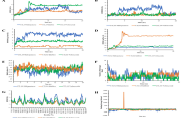
Cytotoxic T lymphocyte-associated antigen-4 (CTLA-4) regulation represents a significant therapeutic target in addressing regulatory T cell (Treg) dysfunction and enhancing immune responses within the tumor microenvironment (TME). This study aimed to evaluate the inhibitory effect of compounds of Cyperus rotundus against the immune checkpoint CTLA-4 in silico. Compounds from Cyperus rotundus tubers were identified by Liquid Chromatography-High Resolution Mass Spectrometry (LC-HRMS). The compounds’ toxicity was predicted using Protox 3.0 web server. In silico study was performed using molecular docking and dynamics simulations of the compounds with CTLA-4 (PDB ID: 1I8L) protein using PyRx and YASARA softwares, respectively. Fourteen compounds were identified in Cyperus rotundus tubers. All compounds were classified as safe with LD50 value ranging from 740 to 26000 mg/kg. Molecular docking showed Verbascoside A and Maltopentaose as potential inhibitors of CTLA-4 with binding energies of -6.3 and -5.4 Kcal/mol, respectively. In the molecular dynamics simulation, RMSD values of all complexes exceeded 3 Å, indicating instability. However, the backbone RMSD and ligand conformation RMSD of CTLA4-Verbascoside A with values below 3 Å indicated more stability. Meanwhile, the CTLA4-maltopentaose complex exhibited higher RMSD value, indicating a change in the CTLA-4 protein structure when interacting with maltopentaose. Furthermore, the prediction of protein targets of maltopentaose and verbascoside A revealed potential direct and indirect target proteins related to cancer signaling pathways, namely; PI3K-Akt and estrogen signaling pathways. The ability of these compounds to modulate the TME-related CTLA-4 indicates their potential as anticancer drug candidates.
Downloads
Article Details
Section

This work is licensed under a Creative Commons Attribution-NonCommercial-NoDerivatives 4.0 International License.
How to Cite
References
1.Oladeru O, Rajack F, Esnakula A, Naab TJ, Kanaan Y, Ricks-Santi L. Beyond triple-negative: high prevalence of quadruple-negative breast cancer in African Americans. Biomed. 2024; 12(7): 1522. Doi: 10.3390/biomedicines12071522 DOI: https://doi.org/10.3390/biomedicines12071522
2.Shiravand Y, Khodadadi F, Kashani SMA, Hosseini-Fard SR, Hosseini S, Sadeghirad H, Ladwa R, O’Byrne K, Kulasinghe A. Immune checkpoint inhibitors in cancer therapy. Curr Oncol. 2022; 29(5): 3044-3060. Doi: 10.3390/curroncol29050247 DOI: https://doi.org/10.3390/curroncol29050247
3.Buchbinder EI and Desai A. CTLA-4 and PD-1 pathways: similarities, differences, and implications of their inhibition. Am J Clin Oncol. 2016; 39(1): 98-106. Doi: 10.1097/COC.0000000000000239 DOI: https://doi.org/10.1097/COC.0000000000000239
4.Rocamora-Reverte L, Melzer FL, Würzner R, Weinberger B. The complex role of regulatory T cells in immunity and aging. Front Immunol. 2021; 11:616949. Doi: 10.3389/fimmu.2020.616949 DOI: https://doi.org/10.3389/fimmu.2020.616949
5.Liu Z, Zhou J, Wu S, Chen Z, Wu S, Chen L, Zhu X, Li Z. Why Treg should be the focus of cancer immunotherapy: the latest thought. Biomed Pharmacother. 2023; 168: 115142. Doi: 10.1016/j.biopha.2023.115142 DOI: https://doi.org/10.1016/j.biopha.2023.115142
6.Tekguc M, Wing JB, Osaki M, Long J, Sakaguchi S. Treg-expressed CTLA-4 depletes CD80/CD86 by trogocytosis, releasing free PD-L1 on antigen-presenting cells. Proc Natl Acad Sci. 2021; 118(30): e2023739118. Doi: 10.1073/pnas.2023739118 DOI: https://doi.org/10.1073/pnas.2023739118
7.Navarrete-Bernal MGC, Cervantes-Badillo MG, Martínez-Herrera JF, Lara-Torres CO, Gerson-Cwilich R, Zentella-Dehesa A, Ibarra-Sánchez MDJ, Esparza-López J, Montesinos JJ, Cortés-Morales VA, Osorio-Pérez D, Villegas-Osorno DA, Reyes-Sánchez E, Salazar-Sojo P, Tallabs-Utrilla LF, Romero-Córdoba S, Rocha-Zavaleta L. Biological landscape of triple negative breast cancers expressing CTLA-4. Front Oncol. 2020; 10: 1206. Doi: 10.3389/fonc.2020.01206 DOI: https://doi.org/10.3389/fonc.2020.01206
8.Konsue A and Taepongsorat L. Phytochemical Screening and Antioxidant Activity of Longevity Remedy from National Thai Traditional Medicine Scripture (Formulary Special Edition). Trop J Nat Prod Res. 2022; 6(6): 868-871. Doi: 10.26538/tjnpr/v6i6.6
9.Lin CH, Peng SF, Chueh FS, Cheng ZY, Kuo CL, Chung JG. The ethanol crude extraction of Cyperus rotundus regulates apoptosis-associated gene expression in HeLa human cervical carcinoma cells in vitro. Anticancer Res. 2019; 39(7): 3697-3709. Doi: 10.21873/anticanres.13518 DOI: https://doi.org/10.21873/anticanres.13518
10.Setiawan M, Agustini SM, Patmawati, Lestari ND. In silico approach for predicting the bioactive compound of Cyperus rotundus to inhibit NF-kB and iNOS signaling pathways. Braz J Biol. 2024; 84: e278323. Doi: 10.1590/1519-6984.278323 DOI: https://doi.org/10.1590/1519-6984.278323
11.Banerjee P, Kemmler E, Dunkel M, Preissner R. ProTox 3.0: a webserver for the prediction of toxicity of chemicals. Nucleic Acids Res. 2024; 52(W1): W513-W520. Doi: 10.1093/nar/gkae303 DOI: https://doi.org/10.1093/nar/gkae303
12.Dwijayanti DR, Widyananda MH, Hermanto FE, Soewondo A, Afiyanti M, Widodo N. Revealing the anti-inflammatory activity of Euphorbia hirta extract: transcriptomic and nitric oxide production analysis in LPS-Induced RAW 264.7 cells. Food Agric Immunol. 2024; 35(1): 2351360. Doi: 10.1080/09540105.2024.2351360 DOI: https://doi.org/10.1080/09540105.2024.2351360
13.Nafisah W, Fatchiyah F, Widyananda MH, Christina YI, Rifa’i M, Widodo N, Djati MS. Potential of bioactive compound of Cyperus rotundus L. rhizome extract as inhibitor of PD-L1/PD-1 interaction: an in silico study. Agric Nat Resour. 2022; 56(4): 751-760. Doi: 10.34044/j.anres.2022.56.4.09 DOI: https://doi.org/10.34044/j.anres.2022.56.4.09
14.Lestari ND, Adharini WI, Widodo W, Rahayu S, Tsuboi H, Jatmiko YD, Rifa’i M. Anti-inflammatory evaluation of Moringa-Albumin combination in inhibiting IFN-γ and TNF-α expression in diabetic mouse model. Res J Pharm Technol. 2022; 15(2): 628-632. Doi: 10.52711/0974-360X.2022.00103 DOI: https://doi.org/10.52711/0974-360X.2022.00103
15.Chen W, Han Y, Chen Y, Liu X, Liang H, Wang C, Khan MZ. Potential Candidate Genes Associated with Litter Size in Goats: A Review. Animals. 2025; 15(1): 82. Doi: 10.3390/ani15010082 DOI: https://doi.org/10.3390/ani15010082
16.Blomme EAG and Will Y. Toxicology strategies for drug discovery: present and future. Chem Res Toxicol. 2016; 29(4): 473-504. Doi: 10.1021/acs.chemrestox.5b00407 DOI: https://doi.org/10.1021/acs.chemrestox.5b00407
17.Spassov DS. Binding affinity determination in drug design: insights from lock and key, induced fit, conformational selection, and inhibitor trapping models. Int J Mol Sci. 2024; 25(13):7124. Doi: 10.3390/ijms25137124 DOI: https://doi.org/10.3390/ijms25137124
18.Adcock SA and McCammon JA. Molecular dynamics: survey of methods for simulating the activity of proteins. Chem Rev. 2006; 106(5): 1589-1615. Doi: 10.1021/cr040426m DOI: https://doi.org/10.1021/cr040426m
19.Salmaso V and Moro S. Bridging molecular docking to molecular dynamics in exploring ligand-protein recognition process: an overview. Front Pharmacol. 2018; 9: 923. Doi: 10.3389/fphar.2018.00923 DOI: https://doi.org/10.3389/fphar.2018.00923
20.Aier I, Varadwaj PK, Raj U. Structural insights into conformational stability of both wild-type and mutant EZH2 receptor. Sci Rep. 2016; 6(1):34984. Doi: 10.1038/srep34984 DOI: https://doi.org/10.1038/srep34984
21.Opo FADM, Rahman MM, Ahammad F, Ahmed I, Bhuiyan MA, Asiri AM. Structure based pharmacophore modeling, virtual screening, molecular docking and ADMET approaches for identification of natural anti-cancer agents targeting XIAP protein. Sci Rep. 2021; 11(1):4049. Doi: 10.1038/s41598-021-83626-x DOI: https://doi.org/10.1038/s41598-021-83626-x
22.Rampogu S, Lee G, Park JS, Lee KW, Kim MO. Molecular docking and molecular dynamics simulations discover curcumin analogue as a plausible dual inhibitor for SARS-CoV-2. Int J Mol Sci. 2022; 23(3): 1771. Doi: 10.3390/ijms23031771
23.Halder SK, Sultana I, Shuvo MN, Shil A, Himel MK, Hasan MdA, Shawan MMAK. In silico identification and analysis of potentially bioactive antiviral phytochemicals against SARS‐CoV‐2: a molecular docking and dynamics simulation approach. BioMed Res Int. 2023; 2023(1):5469258. Doi: 10.1155/2023/5469258 DOI: https://doi.org/10.1155/2023/5469258
24.Das R, Bhattarai A, Karn R, Tamang B. Computational investigations of potential inhibitors of monkeypox virus envelope protein E8 through molecular docking and molecular dynamics simulations. Sci Rep. 2024; 14(1):19585. Doi: 10.1038/s41598-024-70433-3 DOI: https://doi.org/10.1038/s41598-024-70433-3
25.Qasqas LM, Khleifat K, Shadid KA, Qaralleh H, Alqaraleh M. The Impact of Amphimedon chloros Ethyl Acetate Extract on MDA-MB-231 Cell Lines' Expression of Bax, Cyclin D, Caspase 3, P21, C-myc, and Bcl2: Mechanism of inhibition of the Growth of Cancer Cells. Trop J Nat Prod Res. 2024; 8(9):8307-8313. Doi: 10.26538/tjnpr/v8i9.9 DOI: https://doi.org/10.26538/tjnpr/v8i9.9