


Antimicrobial Activity of Actinomycetes Isolates from Different Soil Samples in Ikere-Ekiti, Ekiti State, Nigeria
Article Sidebar
Views | PDF/EPUB Downloads:
72
/ 45
/ 21
Main Article Content
Abstract
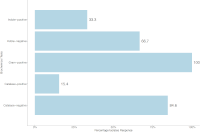
Actinomycetes are a group of Gram-positive, facultatively anaerobic soil bacteria known for their ability to produce bioactive substances. This study analysed the antimicrobial potential of Actinomycetes isolates from soil samples collected from various locations within the University campus in Ikere-Ekiti. Samples were serially diluted and cultured on Starch Casein Agar supplemented with Fluconazole and Nalidixic acid antibiotics. Isolates were characterised morphologically and biochemically, followed by primary and secondary screenings for antimicrobial activity using perpendicular-streak and agar-well diffusion techniques. Colony morphology exhibits variation in size, shape, elevation, edge, surface texture, consistency, and pigmentation. Mean total Actinomycetes count ranged from 0.813 to 0.881 log cfu/mL at dilution 10-2 and 0.378 to 0.602 log cfu/mL at dilution 10-3. All isolates were Gram-positive, and biochemical tests revealed that approximately 15.4% of the isolates were catalase-positive, while about 33.3% demonstrated indole positivity. The recovered 30 Actinomycetes isolates were screened against eight test organisms: Escherichia coli, Klebsiella sp., Pseudomonas sp., Proteus sp., Streptococcus sp., Staphylococcus sp., Aspergillus flavus and Aspergillus niger. Isolates SB31 and DB3 were active against all the test bacteria during primary screening, while isolate SB31 showed activity against only four test bacteria during secondary screening. Furthermore, nine out of 27 isolates predominantly exhibited antifungal activity against A. flavus and A. niger during both primary and secondary screening. These findings show the Actinomycetes isolates are a promising source of antimicrobial compounds.
Downloads
Article Details
Section

This work is licensed under a Creative Commons Attribution-NonCommercial-NoDerivatives 4.0 International License.
How to Cite
References
1.Abd Rashid SA, Ahmad A, Idris H, Yahya MFZR. Evaluation of antibiofilm efficacy of Actinomycetes isolated from BRIS soil of Terengganu against Corynebacterium pseudotuberculosis. International Conference on Science, Technology, and Social Sciences–Biology Track, (ICONSTAS-BIO 2023). Atlantis Press; 2024.17-28. https://doi.org/10.2991/978-94-6463-536-2_3
2.Ahmed SK, Hussein S, Qurbani K, Ibrahim RH, Fareeq A, Mahmood KA. Antimicrobial Resistance: Impacts, Challenges, and Future Prospects. J. Med. Surg. Public Health. 2024; 2: 100081. https://doi.org/10.1016/j.glmedi.2024.100081
3.Selim MSM, Abdelhamid SA, Mohamed SS. Secondary metabolites and biodiversity of Actinomycetes. J. Gen. Eng. Biotech. 2021; 19(1):72. https://doi.org/10.1186/s43141-021-00156-9
4.Hug JJ, Bader CD, Remškar M, Cirnski K, Müller R. Concepts and methods to access novel antibiotics from Actinomycetes. Antibio. 2018; 7(2): 44. https://doi.org/10.3390/antibiotics7020044
5.Anavadiya B, Chouhan S, Saraf M, Goswami D. Exploring endophytic Actinomycetes: A rich reservoir of diverse antimicrobial compounds for combating global antimicrobial resistance. The Microbe. 2024: 100110. https://doi.org/10.1016/j.microb.2024.100110
6.Jagannathan SV, Manemann EM, Rowe SE, Callender MC, Soto W. Marine Actinomycetes, new sources of biotechnological products. Marine Drugs. 2021; 19(7):365. https://doi.org/10.3390/md19070365.
7.Whitman WB, Goodfellow M, Kampfe P, Busse H. Bergey’s manual of systemic bacteriology (2nd edition). Volume 5, Actinobacteria Part A and B. Lippincott Williams and Wilkins, Baltimore. 2012.
8.Fokkema NJ. The role of saprophytic fungi in antagonism against Dreschlera sorokiniana (Helminthosporium sativum) on agar plates and rye leaves with pollen. Physiol. Plant Path. 1973; 3:15–105.
9.Ekundayo FO, Oyeniran KA, Adedokun AD. Antimicrobial activities of some Streptomyces isolated from garden soil samples and fish pond water in FUTA. J. Biosci (Rajshari). 2014; 22: 21–9. https://doi.org/10.3329/jbs.v22i0.30005
10.Ibnouf EO, Aldawsari MF, Waggiallah HA. Isolation and extraction of some compounds that act as antimicrobials from Actinomycetes. Saudi J. Biol. Sci. 2022; 29:103352. https://doi.org/10.1016/j.sjbs.2022.103352
11.Sivarajan A, Shanmugasundaram T, Sangeetha M, Radhakrishnan M, Balagurunathan R. Screening, production, and characterisation of biologically active secondary metabolite(s) from marine Streptomyces sp. PA9 for antimicrobial, antioxidant, and mosquito larvicidal activity. Indian J. Geo Mar. Sci. 2019; 48(8):1319-1326
12.Helmi NR. Exploring the diversity and antimicrobial potential of actinomycetes isolated from different environments in Saudi Arabia: a systematic review. Front. Microbiol. 2025;16:1568899. https://doi.org/10.3389/fmicb.2025.1568899
13.Dwiyani A, Retnowati Y, Sidik A, Kandowangko NY, Uno WD. Isolation and Characterisation of Actinomycetes in the Rhizosphere of Pandanus amaryllifolius Plants in Gorontalo. J. Adv. Res. 2025; 2(1):19-28. https://doi.org/10.61579/mikhayla.v2i1.285
14.Al-Tarawneh TE, Al-Tarawni AH. Isolation, Antibacterial Screening, Phenotypic and Molecular Identification of Antimicrobial-producing Soil Streptomyces Strain. Trop. J. Nat. Prod. Res. 2024;8(9): 8523-8526. https://doi.org/10.26538/tjnpr/v8i9.40
15.Korotaeva NV, Potapenko KS, Sergieieva ZYu, Vasylieva NYu, Ivanytsia VО. Fatty acid composition of actinobacteria isolated from Mussels Mytilus Galloprovincialis of the Black Sea, Odesa Bay. The Ukrainian Biochem. J. 2023; 1(95):85-89 https://doi.org/10.15407/ubj95.01.085
16.Xia Q, Rufty T, Shi W. Soil microbial diversity and composition: Links to soil texture and associated properties. Soil Biol. Biochem. 2020; 149:107953. https://doi.org/10.1016/j.soilbio.2020.107953
17.Barros Gomes E de, Dias Leo RL, Mendonca Rita de C. Actinomycetes bioactive compounds: biological control of fungi and phytopathogenic insects. Afr J. Biotechnol. 2018; 7(17):552-559. https://doi.org/10.5897/AJB2017.16323
18.Baćmaga M, Kucharski J, Wyszkowska J. Microbiological and biochemical properties of soil polluted with a mixture of spiroxamine, tebuconazole, and triadimenol under the cultivation of Triticum aestivum L. Environ. Monit. Assess. 2019; 191:416. https://doi.org/10.1007/s10661-019-7539-4
19.He Z, Yuan C, Chen P, Rong Z, Peng T, Farooq TH. Soil microbial community composition and diversity analysis under different land use patterns in Taojia River Basin. Forests. 2023; 14(5); 1004. https://doi.org/10.3390/f14051004
20.He Z, Wang Y, Bai X, Chu M, Yi Y, Zhu J. Bacterial community composition and isolation of actinobacteria from the soil of Flaming Mountain in Xinjiang, China. Microorganisms. 2023; 11(2): 489. https://doi.org/10.3390/microorganisms11020489
21.Koh HY, Ali Othman NF, Rahim AA, Mokhtar SI, K. Pahirulzaman KA. Antimicrobial activities of Actinomycetes isolated from flooded and unflooded soils. Malaysian J. Med. Health Sci. 2023; 19(9):42-49. http://dx.doi.org/10.47836/mjmhs.19.s9.7
22.Pratiwi RH, Hanafi M, Artanti N, Pratiwi R. Bioactivity of antibacterial compounds produced by endophytic Actinomycetes from Neesia Altissima. J. Trop Life Sci. 2018; 8(1):37-42 https://doi.org/10.11594/jtls.08.01.07
23.Patani A, Pandya J, Vaghela A, Thakor J, Raval V, Rajput K, Panchal R. Isolation and characterisation of cellulase–producing Actinomycetes from agricultural soils of Gujarat, India: Potential for liquid lignocellulosic waste degradation. Vidya-A J. Gujarat Uni. 2025; 4(1):148-159. https://doi.org/10.47413/ycfndr30
24.Sapkota A, Thapa A, Budhathoki A, Sainju M, Shrestha P, Aryal S. Isolation, characterisation, and screening of antimicrobial-producing Actinomycetes from soil samples. Int. J. Microbiol. 2020; 1(7):2716584.https://doi.org/10.1155/2020/2716584
25.Ajuzieogu CA, Onu GO, Onyekachi EO. Diversity, abundance, and enzyme activity of Actinomycetes recovered from tropical freshwater sediment for potential biotechnological applications. Asian J. Trop Biotech. 2025; 22(1)23-29. https://doi.org/10.13057/biotek/c220104
26.Aji OR, Azizah M. Antibacterial activity of Actinomycetes associated with clove plant, Syzygium aromaticum, against Staphylococcus aureus and Escherichia coli. J. Nat. Sci. & Math. Res. 2023; 9(2):143-150. http://dx.doi.org/10.21580/jnsmr.2023.9.2.16702
27.Trenozhnikova LP, Baimakhanova GB, Baimakhanova BB, Balgimbayeva AS, Daugaliyeva ST, Faizulina ER, Tatarkina LG, Spankulova GA, Berillo DA, Beutler JA. Beyond traditional screening: Unveiling antibiotic potentials of actinomycetes in extreme environments. Heliyon. 2024; 10(22) e40371. https://doi.org/10.1016/j.heliyon.2024.e40371
28.Fadhilah QG, Santoso I, Yasman Y. The antagonistic activity of marine Actinomycetes from the mangrove ecosystem against phytopathogenic fungi, Colletotrichum sp. KA. Biodiversitas. 2021; 2(22):640-647. http://dx.doi.org/10.13057/biodiv/d220216
29.Tistechok S, Skvortsova M, Luzhetskyy A, Fedorenko V, Parnikoza I, Gromyko O. Antagonistic and plant growth-promoting properties of Actinomycetes from rhizosphere Deschampsia Antarctica E. Desv. (Galindez Island, Antarctica). Ukrainian Antarctic J. 2019; 1(18):1727-7485. https://doi.org/10.33275/1727-7485.1(18).2019.140
Fatmawati U, Lestari Y, Meryandini A, Nawangsih AA, Wahyudi AT. Isolation of Actinomycetes from maise rhizosphere from Kupang, East Nusa Tenggara Province, and evaluation of their antibacterial, antifungal, and extracellular enzyme activity. Indones J. Biotechnol. 2018; 23(1):40-47. http://dx.doi.org/10.22146/ijbiotech.33064