


Hepatoprotective Effects of Myristica fragrans with Concurrent Caffeine Intake: A Histopathological and Biochemical Analysis
Article Sidebar
Views | PDF/EPUB Downloads:
70
/ 44
/ 28
Main Article Content
Abstract
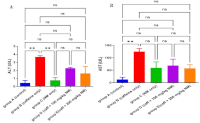
The growing prevalence of caffeine consumption has sparked concerns due to limited research on its potential health-related controversies. This investigation aimed to assess the hepatoprotective effect of Myristica fragrans following the concomitant administration of caffeine. Twenty-five male Wistar rats were randomly assigned to five groups (A-E), each comprising five rats. The control group (Group A) received distilled water (2 mL/kg), while Group B was administered caffeine (40 mg/kg). Group C received Myristica fragrans exclusively at 200 mg/kg. Groups D and E were administered caffeine (40 mg/kg) + Myristica fragrans (100 mg/kg) and caffeine (40 mg/kg) + Myristica fragrans (200 mg/kg), respectively. All treatments were administered orally for 21 days. Following the 21-day treatment period, the rats body weight changes were determined. Serum alanine aminotransferase (ALT) and aspartate aminotransferase (AST) were assessed. Histological examination of the liver was also carried out. Results indicated that the caffeine-only group experienced a statistically significant (p < 0.05) reduction in body weight compared to the control group. Conversely, Group C, which received only Myristica fragrans, significantly (p < 0.05) increased body weight. Serum levels of ALT and AST were significantly (p < 0.05) lower in the groups treated with Myristica fragrans. Histological analyses demonstrated normal liver architecture in the control and Myristica fragrans-only groups, while the caffeine-only group exhibited necrotic liver cell changes. Groups D and E maintained normal liver histology. In conclusion, the concurrent administration of Myristica fragrans alongside caffeine appears to mitigate the detrimental histological and biochemical effects of caffeine consumption
Downloads
Article Details
Section

This work is licensed under a Creative Commons Attribution-NonCommercial-NoDerivatives 4.0 International License.
How to Cite
References
1.Cui WQ, Wang ST, Pan D, Chang B, Sang LX. Caffeine and Its Main Targets of Colorectal Cancer. World J Gastrointest Oncol. 2020; 12(2):149–172.
2.Jin Q, Wang Z, Sandhu D, Chen L, Shao C, Shang F, Xie S, Huang F, Chen Z, Zhang X, Hu J. mRNA-miRNA analyses reveal the involvement of CsbHLH1 and miR1446a in the regulation of caffeine biosynthesis in Camellia sinensis. Horticult Res. 2024; 11(2):uhad282.
3.Herman A and Herman AP. Caffeine's Mechanisms of Action and Its Cosmetic Use. Skin Pharmacol Physiol. 2013; 26(1):8–14.
4.Agomuo E, Duru M, Amadi B, Amadi P, Ugwokaegbe P. Effects of Caffeine on Some Selected Biochemical Parameters Using Rat Model. J Adv Biol. 2017; 9303276:8.
5.Zhou ZD, Xie SP, Saw WT, Ho P, Wang H, Lei Z, Yi Z, Tan EK. The Therapeutic Implications of Tea Polyphenols Against Dopamine (DA) Neuron Degeneration in Parkinson's Disease (PD). Cells. 2019; 8(8):911.
6.Bello ML, Walker AJ, McFadden BA, Sanders DJ, Arent SM. The Effects of TeaCrine® and Caffeine on Endurance and Cognitive Performance During a Simulated Match in High-Level Soccer Players. J Int Soc Sports Nutr. 2019; 16(1):20.
7.Pas̹aoğlu H, Ofluoğlu DFE, Yilmaz DC, Hussein A, Pas̹aoğlu TÖ. Effect of Caffeine on Oxidative Stress in Liver and Heart Tissues of Rats. Turk J Med Sci. 2011; 41(4):665-671.
8.Chaplygina YV and Gubar AS. Morfologiia (Saint Petersburg, Russia). 2016; 150(4):65–71.
9.Aladeyelu SO and Oyewo OO. Effects of Nutmeg (Myristica fragrans) Powder on the Microscopic Architecture of the Liver of Adult Male Wistar Rats. Int J Basic Appl Innov Res. 2018; 7(3):92-97.
10.González-Domínguez R, Mateos RM, Lechuga-Sancho AM, González-Cortés JJ, Corrales-Cuevas M, Rojas-Cots JA, Segundo C, Schwarz M. Synergic Effects of Sugar and Caffeine on Insulin-Mediated Metabolomic Alterations After an Acute Consumption of Soft Drinks. Electrophoresis. 2017; 38(18):2313–2322.
11.Mohd AA, Hamiduddin, Mohammed Z, Mohd I. Phyto-Pharmacological Potential of Jaiphal (Myristica fragrans Houtt.): A Spice of Medicinal Importance and Its Utilization in Unani Medicine. Int J Green Pharm. 2018; 12(1):26-36.
12.Lopez-Garcia E, van Dam RM, Li TY, Rodriguez-Artalejo F, Hu FB. The Relationship of Coffee Consumption with Mortality. Ann Intern Med. 2008; 148:904–914.
13.Song P, Ramprasath T, Wang H, Zou MH. Abnormal Kynurenine Pathway of Tryptophan Catabolism in Cardiovascular Diseases. Cell Mol Life Sci. 2017; 74(16):2899-2916.
14.Modi AA, Feld JJ, Park Y, Kleiner DE, Everhart JE, Liang TJ, Hoofnagle JH. Increased Caffeine Consumption Is Associated with Reduced Hepatic Fibrosis. Hepatol. 2010; 51(1):201–209.
15.Amer MG, Mazen NF, Mohamed AM. Caffeine Intake Decreases Oxidative Stress and Inflammatory Biomarkers in Experimental Liver Diseases Induced by Thioacetamide: Biochemical and Histological Study. Int J Immunopathol Pharmacol. 2017; 30(1):13-24.
16.Wickham KA and Spriet LL. Administration of Caffeine in Alternate Forms. Sports Med (Auckland, NZ). 2018; 48(1):79–91.
17.Kolahdouzan M and Hamadeh MJ. The Neuroprotective Effects of Caffeine in Neurodegenerative Diseases. CNS Neurosci Ther. 2017; 23(4):272–290.
18.Essam FA, Maytham HAA, Jaleel IA. Hepatotoxic Activity of Essential Oil from Nutmeg (Myristica fragrans) Against Tetrachloride-Induced Hepatic Damage in Mice. Int J Pharm Biol Sci. 2012; 2(6):01-08.
19.Ha MT, Vu N, Tran TH, Kim JA, Woo MH, Min BS. Phytochemical and Pharmacological Properties of Myristica fragrans Houtt.: An Updated Review. Arch Pharm Res. 2020; 43(11):1067–1092.
20.Seema YM, Chetana DB, Mayuri SB, Jadhav SL, Gaikwad DD. Pharmacognostic, Phytochemical, Physicochemical, and TLC Profile Study Mace (Aril) of Myristica malabarica Lamk. (Myristicaceae). Int J Phytopharm. 2017; 6(6):329-334.
21.Feldman AT and Wolfe D. Tissue Processing and Hematoxylin and Eosin Staining. Methods Mol Biol. 2014; 1180:31-43.
22.Zheng G, Sayam K, Okubo T, Juneja LR, Oguni I. Anti-Obesity Effects of Three Major Components of Green Tea, Catechins, Caffeine and Theanine, in Mice. In Vivo. 2004; 18:55-62.
23.Heckman MA, Weil J, Gonzalez de Mejia E. Caffeine (1,3,7-Trimethylxanthine) in Foods: A Comprehensive Review on Consumption, Functionality, Safety, and Regulatory Matters. J Food Sci. 2010; 75:R77-R87.
24.Ogunwole E, Akindele OO, Omobola F, Salami SA, Raji Y. Effects of Oral Maternal Administration of Caffeine on Reproductive Functions of Male Offspring of Wistar Rats. Niger J Physiol Sci. 2017; 30:051–058.
25.Tabrizi R, Saneei P, Lankarani KB, Akbari M, Kolahdooz F, Esmaillzadeh A, Nadi-Ravandi S, Mazoochi M, Asemi Z. The Effects of Caffeine Intake on Weight Loss: A Systematic Review and Dose-Response Meta-Analysis of Randomized Controlled Trials. Crit Rev Food Sci Nutr. 2019; 59(16):2688–2696.
26.Das S, Singh VK, Dwivedy AK, Chaudhari AK, Upadhyay N, Singh A, Dubey N. Fabrication, Characterization, and Practical Efficacy of Myristica fragrans Essential Oil Nanoemulsion Delivery System Against Postharvest Biodeterioration. Ecotoxicol Environ Saf. 2020; 189:110000.
27.Loizzo MR, Sicari V, Xiao J, Tundis R. Are Myristica fragrans L. (Myristicaceae) and Its Phytochemicals Useful for Human Health? In: Mérillon JM, Ramawat K, eds. Bioactive Molecules in Food. Springer; 2019.
28.Otto-Ślusarczyk D, Graboń W, Mielczarek-Puta M. Aminotransferaza Asparaginianowa—Kluczowy Enzym w Metabolizmie Ogólnoustrojowym Człowieka [Aspartate Aminotransferase—Key Enzyme in the Human Systemic Metabolism]. Postepy Hig Med Dosw (Online). 2019; 70:219–230.
29.Lai SW and Liao KF. Alanine Aminotransferase-to-Triglycerides Ratio. Eur J Gastroenterol Hepatol. 2013; 25(4):515.
30.Aulbach A and Amuzie C. Biomarkers in Nonclinical Drug Development. 2017; 10.1016/B978-0-12-803620-4.00017-7.
31.Alwahaibi NY, Alkhatri AS, Kumar JS. Hematoxylin and Eosin Stains Show a High Sensitivity but Sub-Optimal Specificity in Demonstrating Iron Pigment in Liver Biopsies. Int J Med Res. 2015; 5(3):169–171.
32.Matta VR and Rada SK. Acute and Sub-Acute Toxicity Studies of Soursop Starch in Swiss Mice and Wistar Rats. Trop J Nat Prod Res. 2024; 8(9).
33.Dokunmu TM, Opara SC, Awani OU, Enoma DO, Adelani BI,
34.Rotimi OA, Yakubu OF. Effects of Caffeine-Artemisinin Combination on Liver Function and Oxidative Stress in Selected Organs in 7, 12-Dimethylbenzanthracene-Treated Rats. Trop J Nat Prod Res. 2021; 5(5):963-969. doi:10.26538/tjnpr/v5i5.27.
35.Hassanen NHM. Protective Effect of Nutmeg and Rosemary on Oxidative Stress in Hypercholesterolemic Rats. Int J Food Sci Nutr. 2015; 4(4):465-476.
36.Young B, Lowe JS, Stevens A, Health JW. Wheater’s Functional Histology: A Text and Colour Atlas. 5th ed. Churchill Livingstone; 2006; 85-90p.
37.Raghu SV, Rao S, Kini V, Kudva AK, George T, Baliga MS. Fruits and their phytochemicals in mitigating the ill effects of ionizing radiation: review on the existing scientific evidence and way forward. Food Funct. 2023; 14(3):1290-1319.
38.Guo Q, Wang J, Ni C, Pan J, Zou J, Shi Y, Sun J, Zhang X, Wang D, Luan F. Research progress on the natural products in the intervention of myocardial infarction. Front Pharmacol. 202; 15:1445349.