


Synergistic Effects of Ethanol Extracts of Eleutherine bulbosa (Dayak Onion) and Tamoxifen on TNF-α and Breast Tissue Morphology in a Mouse Model of Breast Cancer
Article Sidebar
Views | PDF/EPUB Downloads:
95
/ 61
/ 37
Main Article Content
Abstract
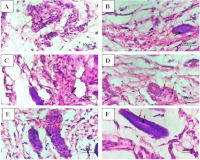
Breast cancer is the most common malignancy in women globally, influenced by inflammatory mediators like Tumor Necrosis Factor-alpha (TNF-α). Although, tamoxifen is a standard therapy for breast cancer, its effectiveness is often limited by adverse side effects and development of resistance. This study aimed to investigate the synergistic potential of tamoxifen and Eleutherine bulbosa ethanol extract in modulating TNF-α levels and improving breast tissue morphology in mouse model of breast cancer. Breast cancer was induced in five of six BALB/c mouse groups (n = 36) by oral administration of 7,12-dimethylbenz(a)anthracene (DMBA) for 28 days, while the negative control remained uninduced. Following induction, the mice received oral treatments with E. bulbosa extract (180 mg/kg) and tamoxifen (10 mg/kg), administered either individually or in sequential combination for 14 days. Serum TNF-α levels were assessed on day 15 using ELISA, and breast tissue morphology was examined histologically. All treatment groups showed a significant TNF-α reduction compared to the positive control (p < 0.001). The sequential administration of tamoxifen followed by E. bulbosa produced the most pronounced reduction in TNF-α levels (53.32 ± 4.94 ng/mL), approaching that observed in the Negative Control group (40.10 ± 5.10 ng/mL). This effect was significantly greater than that achieved with E. bulbosa extract alone (87.48 ± 3.70 ng/mL) or tamoxifen monotherapy (65.68 ± 6.51 ng/mL). Histopathological analysis showed significant improvements in breast tissue morphology, closely resembling normal histological architecture. In conclusion, tamoxifen combined with E. bulbosa extract showed superior efficacy in reducing TNF-α and restoring breast tissue.
Downloads
Article Details
Section

This work is licensed under a Creative Commons Attribution-NonCommercial-NoDerivatives 4.0 International License.
How to Cite
References
1.Sung H, Ferlay J, Siegel RL, Laversanne M, Soerjomataram I, Jemal A. Global cancer statistics 2020: GLOBOCAN estimates of incidence and mortality worldwide for 36 cancers in 185 countries. CA Cancer J Clin. 2021; 71(3):209–249.
2.Bizuayehu HM, Dadi AF, Hassen TA, Ketema DB, Ahmed KY, Kassa ZY. Global burden of 34 cancers among women in 2020 and projections to 2040: population-based data from 185 countries/territories. Int J Cancer. 2024; 154(7):1377–1393.
3.Costa L, Kumar R, Villarreal-Garza C, Sinha S, Saini S, Semwal J. Diagnostic delays in breast cancer among young women: An emphasis on healthcare providers. Breast. 2024; 73:103623.
4.Nindrea RD. Patterns of food consumption among women with breast cancer: a multicenter study in Indonesia. Clin Epidemiol Glob Health. 2024; 29:101778.
5.Siegel RL, Giaquinto AN, Jemal A. Cancer statistics, 2024. CA Cancer J Clin. 2024; 74(1):12–49.
6.Rolski F and Błyszczuk P. Complexity of TNF-α Signaling in Heart Disease. J Clin Med. 2020; 9(10):3267–3275.
7.Danforth DN. The role of chronic inflammation in breast cancer development. Cancers (Basel). 2021; 13(16):3918–3931.
8.Su Y, Zhang Y, Hua X, Huang J, Bi X, Xia W. High-dose tamoxifen in patients with high hormone receptor-expressing advanced breast cancer : a phase II pilot study. Ther Adv Med Oncol. 2021; 13:1758835921993436.
9.Thorén L, Lindh JD, Ackehed G, Kringen MK, Hall P, Bergh J. Impairment of endoxifen formation in tamoxifen-treated premenopausal breast cancer patients with reduced-function CYP2D6 alleles. Br J Clin Pharmacol. 2021; 87(3):1243–1252.
10.Zhang H, Wang J, Li J, Zhou X, Yin L, Wang Y. HMGB1 is a key factor in tamoxifen resistance and has the potential to predict the efficacy of CDK4/6 inhibitors in breast cancer. Cancer Sci. 2021; 112(4):1603–1613.
11.Conti V, Polcaro G, De Bellis E, Donnarumma D, De Rosa F, Stefanelli B. Natural health products for anti-cancer treatment: evidence and controversy. J Press Med. 2024; 14(7):685–698.
12.Quan X, Chen H, Wang W, Gao Y, Zhi X, Li X. Chinese herbal medicine for the treatment of endocrine therapy-related osteoporosis among patients with breast cancer: a systematic review and meta-analysis. J Tradit Chin Med Sci. 2024; 11(2):148–164.
13.Mutiah R, Muzazanah Z, Annisa R, Rachmawati E, Fitrianingsih AA. Comparative metabolite profiling of Eleutherine bulbosa ethanol and water extracts by UPLC-MS/MS and their cytotoxic effects on T47D cells. J Appl Pharm Sci. 2024; 14(8):1–10.
14.Nawir SK, Sulfahri, Khuzaimah A. Eleutherine palmifolia bulb extract reduces diarrhea symptoms and improves histopathology of duodenum in male mice (Mus musculus). Pak J Life Soc Sci. 2024; 22(2):6850–6860.
15.Sardeshmukh S, Deshmukh V, Godse V, Pathrikar A, Joshi A, Gujar S. Mind-relaxation effect of Jatamansi Taila Shirodhara on psychological distress in triple-negative breast cancer patients: results of an open-label randomized controlled clinical trial. J Ayurv Integr Med. 2025; 16(2):101069.
16.Sohemat AA, Atrooz OM, Farah HS. Anti-inflammatory, antioxidant, and protease inhibitory activities of crude methanol extract of Portulaca oleracea L. 2023; 7(2):2397–2401.