


Evaluation of the Antidiabetic Potential of Leaves of Leea rubra Blume in Streptozotocin-Induced Diabetic Swiss Albino Mice
Article Sidebar
Views | PDF/EPUB Downloads:
83
/ 48
/ 30
Main Article Content
Abstract
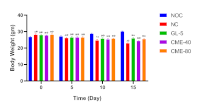
Leea species are used traditionally to treat diabetes, cancer, rheumatism, and arthritis. This study assessed the antidiabetic potential of Leea rubra leaves (LRL). LRL was extracted with methanol, and its antidiabetic potential was evaluated through hypoglycemic screening in normoglycemic mice, oral glucose tolerance test (OGTT), and antihyperglycemic test in streptozotocin (STZ)-induced (45 mg/kg, 3 days) diabetic mice, using two doses of the LRL extract (40 and 80 mg/kg) and glibenclamide (5 mg/kg). For the hypoglycemic and OGTT studies, mice received a single oral dose of LRL extract or glibenclamide, with normal control group receiving vehicle only. For the antihyperglycemic studies, diabetic control mice received vehicle, while treatment groups received daily oral doses of LRL extract or glibenclamide for 15 consecutive days. At the end of treatment, blood glucose levels and body weights were measured. Acute toxicity study, conducted according to OECD guideline 425, showed that the extract is safe with ≥2 g/kg. The extract at dose of 80 mg/kg showed significant hypoglycemic activity (p<0.001) and oral glucose tolerance (p<0.0001) compared to normal control. In diabetic mice, both doses of the extract showed statistically significant (p<0.0001) antihyperglycemic activity at the 15th day of treatment in comparison with the diabetic control mice. The extract at 80 mg/kg showed significant (p<0.05) improvement in body weight. These findings confirm the antidiabetic potential of LRL, suggesting that it may serve as a promising candidate for developing novel antidiabetic therapies, and further research is needed to elucidate the underlying mechanisms of action.
Downloads
Article Details
Section

This work is licensed under a Creative Commons Attribution-NonCommercial-NoDerivatives 4.0 International License.
How to Cite
References
1.Goyal R, Singhal M, Jialal I. Type 2 Diabetes. In: StatPearls. Treasure Island (FL): StatPearls Publishing; 2025.
2.Vilas-Boas EA, Almeida DC, Roma LP, Ortis F, Carpinelli AR. Lipotoxicity and β-Cell Failure in Type 2 Diabetes: Oxidative Stress Linked to NADPH Oxidase and ER Stress. Cells. 2021;10(12):3328.
3.Rahman MS, Hossain KS, Das S, Kundu S, Adegoke EO, Rahman MA, Hannan MA, Uddin MJ, Pang MG. Role of Insulin in Health and Disease: An Update. Int J Mol Sci. 2021;22(12):6403.
4.Ozougwu JC, Obimba KC, Belonwu CD, Unakalamba CB. The pathogenesis and pathophysiology of type 1 and type 2 diabetes mellitus. J Physiol Pathophysiol. 2013;4(4):46-57.
5.Dilworth L, Facey A, Omoruyi F. Diabetes Mellitus and Its Metabolic Complications: The Role of Adipose Tissues. Int J Mol Sci. 2021;22(14):7644.
6.Banday MZ, Sameer AS, Nissar S. Pathophysiology of diabetes: An overview. Avicenna J Med. 2020;10(4):174-188.
7.Cole JB, Florez JC. Genetics of diabetes mellitus and diabetes complications. Nat Rev Nephrol. 2020;16(7):377-390.
8.Wang H, Akbari-Alavijeh S, Parhar RS, Gaugler R, Hashmi S. Partners in diabetes epidemic: A global perspective. World J Diabetes. 2023;14(10):1463-1477.
9.Galicia-Garcia U, Benito-Vicente A, Jebari S, Larrea-Sebal A, Siddiqi H, Uribe KB, Ostolaza H, Martín C. Pathophysiology of Type 2 Diabetes Mellitus. Int J Mol Sci. 2020;21(17):6275.
10.Lv JL, Wei YF, Sun JN, Shi YC, Liu FH, Sun MH, Chang Q, Wu QJ, Zhao YH. Ultra-processed food consumption and metabolic disease risk: an umbrella review of systematic reviews with meta-analyses of observational studies. Front Nutr. 2024;11:1306310.
11.Sun H, Saeedi P, Karuranga S, Pinkepank M, Ogurtsova K, Duncan BB, Stein C, Basit A, Chan JCN, Mbanya JC, Pavkov ME, Ramachandaran A, Wild SH, James S, Herman WH, Zhang P, Bommer C, Kuo S, Boyko EJ, Magliano DJ. IDF Diabetes Atlas: Global, regional and country-level diabetes prevalence estimates for 2021 and projections for 2045. Diabetes Res Clin Pract. 2022;183:109119.
12.Kumar A, Gangwar R, Zargar AA, Kumar R, Sharma A. Prevalence of Diabetes in India: A Review of IDF Diabetes Atlas 10th Edition. Curr Diabetes Rev. 2024;20(1):e130423215752.
13.Sathi NJ, Islam MA, Ahmed MS, Islam SMS. Prevalence, trends and associated factors of hypertension and diabetes mellitus in Bangladesh: Evidence from BHDS 2011 and 2017-18. PLoS One. 2022;17(5):e0267243.
14.Dahiru MM, Samuel NM. A review of the Mechanisms of Action and Side Effects of Anti-diabetic Agents. Trends Pharm Sci. 2022;8(3):195-210.
15.Yedjou CG, Grigsby J, Mbemi A, Nelson D, Mildort B, Latinwo L, Tchounwou PB. The Management of Diabetes Mellitus Using Medicinal Plants and Vitamins. Int J Mol Sci. 2023;24(10):9085.
16.Patel DK, Prasad SK, Kumar R, Hemalatha S. An overview on antidiabetic medicinal plants having insulin mimetic property. Asian Pac J Trop Biomed. 2012;2(4):320-330.
17.Nehru A, Shah Y, Sharma J, Shah Y, Thummar P, Verma P, Shah M. A comprehensive review on the genus Leea (family Leeaceae) with special emphasis on the Indian species. Int J Pharm Sci Res. 2021;12(5):2559-2569.
18.Hossain F, Mostofa MG, Alam AK. Traditional uses and pharmacological activities of the genus Leea and its phytochemicals: A review. Heliyon. 2021;7(2):e06222.
19.Dalu D, Duggirala S, Akarapu S. Anti hyperglycemic and hypolipidemic activity of Leea indica. Int J Bioassays. 2014;3(7): 3155-3159.
20.Rahman MA, Chowdhury J, Aklima J, Azadi MA. Leea macrophylla Roxb. leaf extract potentially helps normalize islet of β-cells damaged in STZ-induced albino rats. Food Sci Nutr. 2018;6(4):943-952.
21.Hao DC, Xiao PG. Pharmaceutical resource discovery from traditional medicinal plants: Pharmacophylogeny and pharmacophylogenomics. Chin Herb Med. 2020;12(2):104-117.
22.Simmons MP, Cappa JJ, Archer RH, Ford AJ, Eichstedt D, Clevinger CC. Phylogeny of the Celastreae (Celastraceae) and the relationships of Catha edulis (qat) inferred from morphological characters and nuclear and plastid genes. Mol Phylogenet Evol. 2008;48(2):745-757.
23.Alam A, Rahman A, Baki MA, Rashid M, Bhuyan MSA, Sadik G. Antidiarrhoeal principle of Achyranthes ferruginea Roxb. and their cytotoxicity. Bangladesh Pharm J. 2002;12:1-4.
24.Gebremeskel L, Tuem KB, Teklu T. Evaluation of Antidiabetic Effect of Ethanolic Leaves Extract of Becium grandiflorum Lam. (Lamiaceae) in Streptozotocin-Induced Diabetic Mice. Diabetes Metab Syndr Obes. 2020;13:1481-1489.
25.Ayele AG, Kumar P, Engidawork E. Antihyperglycemic and hypoglycemic activities of the aqueous leaf extract of Rubus erlangeri Engl (Rosacea) in mice. Metabol Open. 2021;11:100118.
26.Sun C, Xinzhi L, Liu L, Canet MJ, Guan Y, Fan Y, Zhou Y. Effect of fasting time on measuring mouse blood glucose level. Int J Clin Exp Med. 2016;9(3):4186-4189.
27.Gebreyohannis T, Shibeshi W, Asres K. Effects of Solvent Fractions of Caylusea abyssinica (Fresen.)Fisch & Mey on Blood Glucose levels on Normoglycaemic, Glucose Loaded and Streptozotocin-Induced Diabetic Rodents. J Nat Remedies. 2014; 14(1):68-75.
28.Tesfaye A, Makonnen E, Gedamu S. Hypoglycemic and antihyperglycemic activity of aqueous extract of Justicia schimperiana leaves in normal and streptozotocin-induced diabetic mice. Int J Sci Res. 2016;7:107-113.
29.Choi JSY, de Haan JB, Sharma A. Animal models of diabetes-associated vascular diseases: an update on available models and experimental analysis. Br J Pharmacol. 2022;179(5):748-769.
30.Zhang M, Lv XY, Li J, Xu ZG, Chen L. The characterization of high-fat diet and multiple low-dose streptozotocin induced type 2 diabetes rat model. Exp Diabetes Res. 2008;2008:704045.
31.Geetha G, Gopinathapillai PG, Sankar V. Anti diabetic effect of Achyranthes rubrofusca leaf extracts on alloxan induced diabetic rats. Pak J Pharm Sci. 2011;24(2):193-199.
32.Joseph B, Kumar S, Bai VN. Evaluation of anti-diabetic activity of Strobilanthes cuspidata in alloxan induced diabetic rats and the effect of bioactive compounds on inhibition of α-amylase enzyme. J Pharmacogn Phytochem. 2016;5(4):169-175.
33.Vidhya R, Gandhi G, Gnanasekaran J, Radhika J, Brindha P. Evaluation of antidiabetic potential of Achyranthes aspera Linn. on alloxan induced diabetic animals. Int J Pharm Pharm Sci. 2012;4(Suppl 4):577-580.
34.Furman BL. Streptozotocin-Induced Diabetic Models in Mice and Rats. Curr Protoc Pharmacol. 2015;70:5.47.1-5.47.20.
35.Angelis DK, Irigoyen MC, Morris M. Diabetes and cardiovascular autonomic dysfunction: application of animal models. Auton Neurosci. 2009;145(1-2):3-10.
36.Eleazu CO, Eleazu KC, Chukwuma S, Essien UN. Review of the mechanism of cell death resulting from streptozotocin challenge in experimental animals, its practical use and potential risk to humans. J Diabetes Metab Disord. 2013;12(1):60.
37.Candasamy M, Murthy TE, Gubiyappa KS, Chellappan DK, Gupta G. Alteration of glucose lowering effect of glibenclamide on single and multiple treatments with fenofibrate in experimental rats and rabbit models. J Basic Clin Pharm. 2014;5(3):62-67.
38.Shehadeh MB, Suaifan GA, Abu-Odeh AM. Plants Secondary Metabolites as Blood Glucose-Lowering Molecules. Molecules. 2021;26(14):4333.
39.Kuo FY, Cheng KC, Li Y, Cheng JT. Oral glucose tolerance test in diabetes, the old method revisited. World J Diabetes. 2021;12(6):786-793.
40.Lenzen S. The mechanisms of alloxan- and streptozotocin-induced diabetes. Diabetologia. 2008;51(2):216-226.
41.Mostafavinia A, Amini A, Ghorishi SK, Pouriran R, Bayat M. The effects of dosage and the routes of administrations of streptozotocin and alloxan on induction rate of type1 diabetes mellitus and mortality rate in rats. Lab Anim Res. 2016;32(3):160-165.
42.Ramkumar KM, Vanitha P, Uma C, Suganya N, Bhakkiyalakshmi E, Sujatha J. Antidiabetic activity of alcoholic stem extract of Gymnema montanum in streptozotocin-induced diabetic rats. Food Chem Toxicol. 2011;49(12):3390-3394.