


Therapeutic Effects of Thai Herbal Nasal Steam Inhalation Therapy for the Treatment of Persistent Allergic Rhinitis
Article Sidebar
Views | PDF/EPUB Downloads:
136
/ 68
/ 39
Main Article Content
Abstract
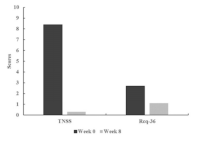
Traditional Thai herbal therapy has historically been used for management of allergic rhinitis. However, there was limited evidence of Thai herbal formulation in allergic rhinitis. This study aimed to evaluate the therapeutic effects of Thai herbal formulation for treating allergic rhinitis. A pre-post study was performed to evaluate the effectiveness of Thai herbal formulation in treating allergic rhinitis. The patients had herbal steam inhalation treatment for twenty minutes, twice weekly (10 minutes each session, 2 sessions, with a 10-minute interval between sessions) for a duration of two months. Thirty participants completed the Total Nasal Symptom Score (TNSS) and the Rhinoconjunctivitis Quality of Life Questionnaire (Rcq-36). The average age was 20.5 ± 0.63 years, with congestion being the most common clinical complaint at 90%, followed by itching at 80%, discharge at 73.33%, sneezing at 53.33%, and dyspnea at 20%. Following two months of therapy, TNSS and Rcq-36 scores exhibited statistically significant improvements (p < 0.05) in response to the herbal formulation therapy, compared to the baseline. The findings indicated that the Thai herbal formulation was significantly advantageous in alleviating overall nasal symptoms and enhancing the quality of life related to rhinoconjunctivitis in the treatment of perennial allergic rhinitis.
Downloads
Article Details
Section

This work is licensed under a Creative Commons Attribution-NonCommercial-NoDerivatives 4.0 International License.
How to Cite
References
1.Nur Husna SM, Tan HT, Md Shukri N, Mohd Ashari NS, Wong KK. Allergic rhinitis: a clinical and pathophysiological overview. Front Med. 2022;9:874114.
2.Bousquet J, Khaltaev N, Cruz AA, Denburg J, Fokkens WJ, Togias A, Zuberbier T, Baena‐Cagnani CE, Canonica GW, Van Weel C, Agache I. Allergic rhinitis andits impact on asthma (ARIA) 2008 update. Allergy. 2008;63(86):8-160.
3.Meltzer EO, Bukstein DA. The economic impact of allergic rhinitis and current guidelines for treatment. Ann Allergy Asthma Immunol. 2011;106(2):12-16.
4.Brozek JL, Bousquet J, Baena-Cagnani CE, Bonini S, Canonica GW, Casale TB, et al. Allergic rhinitis and its impact on asthma (ARIA) guidelines: 2010 revision. J. Allergy Clin Immunol. 2010;126(3):466-476.
5.Kern J, Bielory L. Complementary and alternative therapy (CAM) in the treatment of Allergic Rhinitis. Curr Allergy Asthma Rep. 2014;14(12):479.
6.Yamprasert R, Chanvimalueng W, Mukkasombut N, Itharat A. Ginger extract versus Loratadine in the treatment of allergic rhinitis: a randomized controlled trial. BMC Complement Med Ther. 2020;20(1):119.
7.Hoang MP, Seresirikachorn K, Chitsuthipakorn W, Samuthpongtorn J, Prasittivatechakool K, Tantilipikorn P, Poachanukoon O, Kasemsiri P, Kirtsreesakul V, Kanjanaumporn J, Aeumjaturapat S. Phase III study of Phlai capsules in the treatment of allergic rhinitis: A randomized, double-blind, placebo-controlled trial. Asian Pac J. Allergy Immunol. 2023.
8.Chansiw N, Chusri P, Praman S, Hawiset T, Sukhorum W, Champakam S, Charoensup R. Anti-inflammatory potential of a Thai traditional remedy called Prabchompoothaweep in an animal model of acute and sub-acute inflammation. J. Ethnopharmacol. 2024;319(3):117380.
9.Cui J, Li M, Wei Y, Li H, He X, Yang Q, Li Z, Duan J, Wu Z, Chen Q, Chen B. Inhalation aromatherapy via brain-targeted nasal delivery: natural volatiles or essential oils on mood disorders. Front pharmacol. 2022;13:860043.
Wang B, Chen H, Qu F, Song Y, Di T, Wang P, Zhang X. Identification of aroma-active components in black teas produced by six Chinese tea cultivars in high-latitude region by GC-MS and GC-O analysis. Eur Food Res Technol. 2021; 248(3):647-657.
10.Vathanophas V, Pattamakajonpong P, Assanasen P, Suwanwech T. The effect of steam inhalation on nasal obstruction in patients with allergic rhinitis. Asian Pac J. Allergy Immunol. 2021;39(4):304-308.
11.Ellis AK, Soliman M, Steacy L, Boulay MÈ, Boulet LP, Keith PK, Vliagoftis H, Waserman S, Neighbour H. The allergic rhinitis - clinical investigator collaborative (AR-CIC): nasal allergen challenge protocol optimization for studying AR pathophysiology and evaluating novel therapies. Allergy Asthma Clin Immunol. 2015;11(1):16.
12.Bunnag C, Leurmarnkul W, Jareoncharsri P, Ungkanont K, Tunsuriyawong P, Kosrirukvongs P, Sriussadaporn P, Musiksukont S, Kosawanon S, Chairojkanjana K. Development of a health-related quality of life questionnaire for Thai patients with rhinoconjunctivitis. Asian Pac J. Allergy Immunol. 2004;22:69-79.
13.Siriyong T, Rayamaitree N, Chetae F, Salaemaeng A, Soh A, Ontong JC, Voravuthikunchai SP. Thai herbal medicine for residual symptoms of COVID-19 recovered patients: A pilot study. Curr Res Tradit Med. 2025. DOI: 10.2174/0122150838392708250822133729.
14.Jitjum S, Kosol T, Yincharoen K, Laohaprapanon S, Naksod W, Siriyong T. Therapeutic effects of Apaisalee formulation and herbal steam inhalation for refractory chronic obstructive pulmonary disease. Curr Res Tradit Med. 2025. (Accepted) (Manuscript number: BMS-CTM-2025-79).
15.Siriyong T, Chanphool H, Jitjum S, Laohaprapanon S, Voravuthikunchai SP. Therapeutic efficacy and safety of traditional Thai herbal medicines for insomnia: a double-blind randomized controlled trial. Adv Integr Med. 2025;12(2025):100459.
16.Arpornchayanon W, Klinprung S, Chansakaow S, Hanprasertpong N, Chaiyasate S, Tokuda M, Tamura H. Antiallergic activities of shallot (Allium ascalonicum L.) and its therapeutic effects in allergic rhinitis. Asian Pac J. Allergy Immunol. 2022;40(4):393-400.
17.Srifuengfung S, Bunyapraphatsara N, Satitpatipan V, Tribuddharat C, Junyaprasert VB, Tungrugsasut W, Srisukh V. Antibacterial oral sprays from kaffir lime (Citrus hystrix DC.) fruit peel oil and leaf oil and their activities against respiratory tract pathogens. J. Tradit Complement Med. 2019;10(6):594-598.
18.Santos Serafim Machado M, Ferreira Silva HB, Rios R, Pires de Oliveira A, Vilany Queiroz Carneiro N, Santos Costa R, Santos Alves W, Meneses Souza FL, da Silva Velozo E, Alves de Souza S, Sarmento Silva TM. The anti-allergic activity of Cymbopogon citratus is mediated via inhibition of nuclear factor kappa B (Nf-Κb) activation. BMC Complement Med Ther. 2015;15:168.
19.Kawamoto Y, Ueno Y, Nakahashi E, Obayashi M, Sugihara K, Qiao S, Iida M, Kumasaka MY, Yajima I, Goto Y, Ohgami N. Prevention of allergic rhinitis by ginger and the molecular basis of immunosuppression by 6-gingerol through T cell inactivation. J. Nutr Biochem. 2016;27:112-22.
20.Jeeno P, Yadoung S, Yana P, Hongsibsong S. Phytochemical profiling and antioxidant capacity of traditional plants, northern Thailand. Plants. 2023;12(23):3956.
21.Chen X, Dai X, Liu Y, Yang Y, Yuan L, He X, Gong G. Solanum nigrum Linn.: An insight into current research on traditional uses, phytochemistry, and pharmacology. Front pharmacol. 2022;13:918071.
22.Chen J, Tang C, Zhou Y, Zhang R, Ye S, Zhao Z, Lin L, Yang D. Anti-Inflammatory property of the essential oil from Cinnamomum camphora (Linn.) Presl leaves and the evaluation of its underlying mechanism by using metabolomics analysis. Molecules. 2020;25(20):4796.
23.Yoon SC, Je IG, Cui X, Park HR, Khang D, Park JS, Kim SH, Shin TY. Anti-allergic and anti-inflammatory effects of aqueous extract of Pogostemon cablin. Int J. Mol Med. 2016;37(1):217-224.
24.Santana de Oliveira M, Vostinaru O, Rigano D, de Aguiar Andrade EH. Bioactive compounds present in essential oils: Advances and pharmacological applications. Front pharmacol. 2023;14:1130097.
25.Horváth G, Ács K. Essential oils in the treatment of respiratory tract diseases highlighting their role in bacterial infections and their anti-inflammatory action: a review. Flavour Fragr J. 2015;30(5):331-341.
26.Leigh-de Rapper S, Viljoen A, van Vuuren S. Essential oil blends: The potential of combined use for respiratory tract infections. Antibiotics. 2021;10(12):1517.
27.Ghahremani-Chabok A, Bagheri-Nesami M, Shorofi SA, Mousavinasab SN, Gholipour-Baradari A, Saeedi M. The effects of Thymus vulgaris inhalation therapy on airway status and oxygen saturation of patients under mechanical ventilation: A randomized clinical trial. Adv Integr Med. 2021;8(2):92-100.
28.Tran KN, Kwon JH, Kim MK, Nguyen NPK, Yang IJ. Intranasal delivery of herbal medicine for disease treatment: A systematic review. Phytomedicine. 2024;127:155484.
29.Subali D, Kurniawan R, Surya R, Lee IS, Chung S, Ko SJ, Moon M, Choi J, Park MN, Taslim NA, Hardinsyah H. Revealing the mechanism and efficacy of natural products on treating the asthma: Current insights from traditional medicine to modern drug discovery. Heliyon. 2024;10(11):e32008.
30.Sou T, Bergström CAS. Contemporary formulation development for inhaled pharmaceuticals. J. Pharm Sci. 2021;110(1):66-86.
31.Alkotaji M, Ismail ST, Alnori H. Nasal in-situ gel of inert cellulose for allergic rhinitis. Trop J. Nat Prod. 2022;6(9):1414-1419.