


Unlocking Gut-Driven Metabolic Repair: The Role of Glucomannan Porang (Amorphophallus muelleri Blume) in Insulin Resistance and Short-Chain Fatty Acid Modulation in a Type 2 Diabetes Mellitus Rat Model
Article Sidebar
Views | PDF/EPUB Downloads:
106
/ 59
/ 27
Main Article Content
Abstract
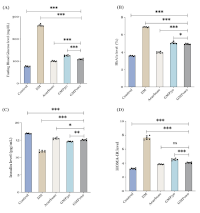
Type 2 diabetes mellitus (T2DM) is characterized by impaired insulin sensitivity and alterations in gut microbial metabolites, particularly short-chain fatty acids (SCFAs). The gut microbiota contributes to energy homeostasis through metabolites involved in insulin signalling. Glucomannan porang (GMP), a prebiotic fibre native to Indonesia, may serve as a therapeutic agent by modulating gut microbiota and improving glucose regulation. This study evaluated the effects of GMP on insulin resistance and SCFAs modulation in a streptozotocin-nicotinamide (STZ-NA)-induced T2DM rat model. Thirty male Wistar rats were acclimatized for seven days, then randomly assigned to five groups: control, diabetic, Acarbose (1.8 mg/200 g BW), GMP50 (50 mg/200 g BW), and GMP100 (100 mg/200 g BW). T2DM was induced in all but the control group using STZ-NA, and induction success was validated three days later through fasting blood glucose (FBG) levels exceeding 250 mg/dL. Following validation, treatments were administered orally for 28 consecutive days. At the end of the study, blood samples were collected to measure FBG, insulin, HbA1c, HOMA-IR, GLP-1, GLUT-4, IGF-1, and SCFA profiles. GMP100 significantly reduced FBG and HbA1c (p<0.001), improved insulin sensitivity and increased GLP-1, GLUT-4, and propionic acid levels. GMP100 also significantly lowered HOMA-IR (p<0.001) and elevated IGF-1, acetate and butyrate levels, showing effects comparable to acarbose. GMP50 produced moderate, but less pronounced, improvements compared to GMP100. In conclusion, GMP at 100 mg/200 g BW effectively ameliorated insulin resistance and favourably modulated SCFA profiles in T2DM rats, suggesting its potential as an adjuvant therapy for metabolic improvement in T2DM.
Downloads
Article Details
Section

This work is licensed under a Creative Commons Attribution-NonCommercial-NoDerivatives 4.0 International License.
How to Cite
References
1.Schwartz SS, Herman ME. Gluco-regulation & type 2 diabetes: entrenched misconceptions updated to new governing principles for gold standard management. Front Endocrinol. 2024; 15:1-12.
2.Zamolodchikova TS, Tolpygo SM, Kotov A V. Insulin in the regulation of the renin-angiotensin system: a new perspective on the mechanism of insulin resistance and diabetic complications. Front Endocrinol. 2024; 15:1-7.
3.American Diabetes Association. Diagnosis and classification of diabetes: standards of care in diabetes—2024. Diabetes Care [Online]. 2024 [cited 2025 Aug 8]. Available from: https://doi.org/10.2337/dc24-S002.
4.International Diabetes Federation. Diabetes around the world [Online]. 2025 [cited 2025 Aug 8]. Available from: https://diabetesatlas.org/resources/idf-diabetes-atlas-2025/.
5.Yan Z, Cai M, Han X, Chen Q, Lu H. The interaction between age and risk factors for diabetes and prediabetes: a community-based cross-sectional study. Diabetes, Metab Syndr Obes. 2023; 16:85-93.
6.Adibah FH, Zulaekah DS. Carbohydrate intake, glycemic load and blood glucose levels of diabetes mellitus patients in community health center of Surakarta city. J War LPM [Internet]. 2022; 25:10-19. Available from: http://journals.ums.ac.id/index.php/warta.
7.Eliana F, Agung Pranoto B. A randomized controlled clinical trial of carbohydrate mix-fortified nutrition in type 2 diabetes mellitus patients. Med J. Indones. 2020; 29(3):275-282.
8.Ma X, Nan F, Liang H, Shu P, Fan X, Song X, Hou Y, Zhang D. Excessive intake of sugar: An accomplice of inflammation. Front Immunol. 2022; 13:1-12.
9.Li H, Meng Y, He S, Tan X, Zhang Y, Zhang X, Wang L, Zheng W. Macrophages, chronic inflammation, and insulin resistance. Cells. 2022; 11(19):1-24.
10.Hou J, Cui Y, Gao J, Rong M. Dietary simple sugar intake, metabolic indicators, markers of inflammation, and injury among semi-professional football players. Food Nutr Res 2025; 69:1-8.
11.Abdul-Ghani M, DeFronzo RA. Insulin Resistance and Hyperinsulinemia: the Egg and the Chicken. J. Clin Endocrinol Metab. 2021;106(4):e1897–1899.
12.Lee Y, Lee HY. Revisiting the Bacterial Phylum Composition in Metabolic Diseases Focused on Host Energy Metabolism. Diabetes Metab J. 2020;44(5):658–667.
13.Menafra D, Proganò M, Tecce N, Pivonello R, Colao A. Diet and gut microbiome: Impact of each factor and mutual interactions on prevention and treatment of type 1, type 2, and gestational diabetes mellitus. Hum Nutr Metab. 2024; 38: 200-286
14.Liu J, Li F, Yang L, Luo S, Deng Y. Gut microbiota and its metabolites regulate insulin resistance: traditional Chinese medicine insights for type 2 diabetes mellitus. Front Microbiol. 2025; 16:1-15.
15.He FF, Li YM. Role of gut microbiota in the development of insulin resistance and the mechanism underlying polycystic ovary syndrome: a review. J. Ovarian Res. 2020; 13(1):1-13.
16.Li A, Lin C, Xie F, Jin M, Lin F. Berberine Ameliorates insulin resistance by inhibiting IKK/NF-κB, JNK, and IRS-1/AKT signaling pathway in liver of gestational diabetes mellitus rats. Metab Syndr Relat Disord. 2022; 20(8):480-488.
17.Chirivi M, Rendon CJ, Myers MN, Prom CM, Roy S, Sen A, Lock A, Contreras G. Lipopolysaccharide induces lipolysis and insulin resistance in adipose tissue from dairy cows. J Dairy Sci. 2022; 105(1):842-855.
18.Zheng J, An Y, Du Y, Song Y, Zhao Q, Lu Y. Effects of short-chain fatty acids on blood glucose and lipid levels in mouse models of diabetes mellitus: A systematic review and network meta-analysis. Pharmacol Res. 2024; 199:107041.
19.Pham NHT, Joglekar M V, Wong WKM, Nassif NT, Simpson AM, Hardikar AA. Short-chain fatty acids and insulin sensitivity: a systematic review and meta-analysis. Nutr Rev. 2024; 82(2):193-209.
20.Toda G, Soeda K, Okazaki Y, Kobayashi N, Masuda Y, Arakawa N, Suwanai H, Masamoto Y, Izumida Y, Kamei N, Sasako T, Suzuki R, Kubota T, Kubota N, Kurokawa M, Tobe K, Noda T, Honda K, Accili D, Yamauchi T, Kadowaki T, Ueki K. Insulin- and lipopolysaccharide-mediated signaling in adipose tissue macrophages regulates postprandial glycemia through Akt-mTOR activation. Mol Cell. 2020; 79(1):43-53.
21.Resnick O, Bril F, Beauchamp G. Glucagon-like peptide-1 receptor agonists and type 1 diabetes: a potential game changer?. Front Endocrinol. 2024; 15:1520313.
22.Cabrera-Cruz H, Oróstica L, Plaza-Parrochia F, Torres-Pinto I, Romero C, Vega M. The insulin-sensitizing mechanism of myo-inositol is associated with AMPK activation and GLUT-4 expression in human endometrial cells exposed to a PCOS environment. Am J. Physiol Endocrinol Metab. 2020; 318(2):237-248.
23.Qian X, Si Q, Lin G, Zhu M, Lu J, Zhang H, Wang G, Chen W. Bifidobacterium adolescentis is effective in relieving type 2 diabetes and may be related to its dominant core genome and gut microbiota modulation capacity. Nutrients. 2022; 14(12):2479.
24.Won G, Choi SI, Kang CH, Kim GH. Lactiplantibacillus plantarum MG4296 and Lacticaseibacillus paracasei MG5012 ameliorates insulin resistance in palmitic acid-induced HepG2 cells and high fat diet-induced mice. Microorganisms. 2021; 9(6):1139.
25.Yu J, Lee SH, Kim MK. Recent updates to clinical practice guidelines for diabetes mellitus. Endocrinol Metab. 2022; 37(1):26-37.
26.Yang Y, Chang Y, Wu Y, Liu H, Liu Q, Kang Z, Wu M, Yin H, Duan J. A homogeneous polysaccharide from Lycium barbarum: structural characterizations, anti-obesity effects and impacts on gut microbiota. Int J. Biol Macromol. 2021; 183:2074-2087.
27.Xu X, Gao Z, Yang F, Yang Y, Chen L, Han L, Zhao N, Xu J, Wang X, Ma Y, Shu L, Hu X, Lyu N, Pan Y, Zhu B, Zhao L, Tong X, Wang J. Antidiabetic effects of gegen qinlian decoction via the gut microbiota are attributable to its key ingredient berberine. Genom Proteom Bioinfor. 2020; 18(6):721-736.
28.Safitri BIA, Hidayati S, Nurdin SU, Rizal S. Study of waxy cassava analog rice subtituted with porang glucomannan (Amorphophallus Oncophyllus) as antidiabetic for alloxan-induced mice. J. Agroind Halal. 2023; 9(3):246-256. Available from: https://repository.lppm.unila.ac.id/53021/1/Bella Intan Safitri dkk_Jurnal Agroindustri Halal_Glukomanan.pdf
29.Ariftiyana S, Nurfikasari L, Murniyati D, Prastowo A, Kurniasari Y, Hadi H, Aprilia V. Porang (Amorphophallus oncophyllus) flour macerated with Strobilanthes crispus reduced the blood glucose levels of streptozotocin-induced diabetic rats. Maced J Med Sci. 2022; 10(8):127-131.
30.Widjanarko SB, Jamil SNA, Ni’maturohmah E, Putri WDR. The potential of porang (Amorphophallus muelleri Blume) flour and porang flour formulation as an anti-diabetes type-2 agent. HAYATI J Biosci. 2023; 30(5):855-863.
31.Fiorenza J, Wirasuta T, Gelgel IMA. The potential of Amorphophallus sp. as a functional food for diabetes mellitus patients. Pros Work dan Semin Nas Farm. 2023; 1:230-243.
32.Anggela, Harmayani E, Setyaningsih W, Wichienchot S. Prebiotic effect of porang oligo-glucomannan using fecal batch culture fermentation. Food Sci Technol. 2022; 42:1-7.
33.Quek A, Kassim NK, Ismail A, Alif M, Latif M, Shaari K, Tan D, Lim P. Identification of dipeptidyl peptidase-4 and α-amylase spectrometry, in vitro and in silico methods. Molecules. 2020; 26(1):1-17.
34.Singh AN, Patel MI, Shah KR, Unadkat V. A comprehensive review on acarbose in glycaemia control: current insights and future prospects. Int J. Basic Clin Pharmacol. 2025; 14(3):428-436.
35.Nuraini N, Effionora Anwar, Dian Ratih Laksmitawati, Hendig Winarno, Siti Irma Rahmawati. Anti-inflammatory activity of glucomannan resulting from β-mannanase enzyme hydrolysis in RAW 264.7 Cells. J. Nat Prod Degener Dis. 2025; 2(2):63-71.
36.Utami NN, Lestari LA, Nurliyani, Harmayani E. Consumption of jelly dessert containing porang (Amorphophallus oncophyllus) glucomannan and inulin along with low-calorie diet contributes to glycemic control of obese adults: A randomized clinical trial. Food Res. 2021; 5(3):152-162.
37.Hosiana AM, Pinatih GNI, Laksemi DAAS. Beneficial health effects of porang (Amorphophallus muelleri): a review. Indones J. Biomed Sci. 2023; 17(2):235-238.
38.Wahidin M, Achadi A, Besral B, Kosen S, Nadjib M, Nurwahyuni A, Ronoatmodjo S, Rahajeng E, Pane M, Kusuma D. Projection of diabetes morbidity and mortality till 2045 in Indonesia based on risk factors and non-communicable disease prevention and control programs. Sci Rep. 2024; 14(1):1-17. Available from: https://doi.org/10.1038/s41598-024-54563-2
39.Antar SA, Ashour NA, Sharaky M, Khattab M, Ashour NA, Zaid RT, Roh Ej, Elkamhawy A, Al-Karmalawy AA. Diabetes mellitus: classification, mediators, and complications; a gate to identify potential targets for the development of new effective treatments. Biomed Pharmacother. 2023; 168:115734. Available from: https://doi.org/10.1016/j.biopha.2023.115734
40.Eloutify YT, El-Shiekh RA, Ibrahim KM, Hamed AR, Al-Karmalawy AA, Shokry AA, Ahmed YH, Avula B, Katragunta K, Khan IA, Meselhy MR. Bioactive fraction from Plumeria obtusa L. attenuates LPS-induced acute lung injury in mice and inflammation in RAW 264.7 macrophages: LC/QToF-MS and molecular docking. Inflammopharmacology. 2023; 31(2):859-875.
41.Chen Z, Tian R, She Z, Cai J, Li H. Role of oxidative stress in the pathogenesis of nonalcoholic fatty liver disease. Free Radic Biol Med. 2020; 152:116-141.
42.Mashudi S, Putri DR, Aziz YS, Larasati SF, Paramita M S, Widodo SP. Effects of konjac glucomannan on blood profile in schizophrenia with hyperglycemia. Int J Health Sci (Qassim). 2022; 6(1):714-720.
43.Safarti NJ, Santosa B, Adhipireno P. Differences in glucose, insulin, homa ir, and scube2 protein levels in controlled and uncontrolled type 2 dm patients. J Muhammadiyah Med Lab Technol. 2023; 6(1):97.
44.Rahmawati N, DK K, Afifah DN. Antioxidant total and HOMA-IR of diabetic rats given Crocatum piper and Andrographis paniculata leaf extracts. J Biomed Transl Res. 2021; 7(2):56-61.
45.Safitri AH, Sayyida RA, Setyawan S, Tyagita N. Effects of porang glucomannan combined with a high-protein diet on oxidative stress, inflammation, and aging markers in D-galactose-induced rats. Narra J. 2025; 5(1):1-13.
46.Harimawan AIW. Glucomannan from porang (Amorphophallus muelleri) improves short-chain fatty acid in wistar rat with high-fat and high-fructose diet. Babali Nurs Res. 2024; 5(2):297-307.
47.Hu Q, Huang G, Huang H. Extraction, structure, activity and application of konjac glucomannan. Ultrason Sonochem [Internet]. 2025; 116:107315. Available from: https://doi.org/10.1016/j.ultsonch.2025.107315
48.Lee JG, Lee J, Lee AR, Jo SV, Park CH, Han DS, Eun CS. Impact of short-chain fatty acid supplementation on gut inflammation and microbiota composition in a murine colitis model. J Nutr Biochem. 2022; 101:108926.
49.Sudjarwo S, Rofiq R, Eka PA, Maria PFA, Faris AM, Widyowati R. Glucomannan powder can be used as a food substitute for people with diabetes mellitus. Food Res. 2024; 8(4):25-30.
50.Cruz PL, Moraes-Silva IC, Ribeiro AA, Machi JF, de Melo MDT, Dos Santos F, Da Silva MB, Strunz CMC, Caldini EG, Irigoyen MC. Nicotinamide attenuates streptozotocin-induced diabetes complications and increases survival rate in rats: role of autonomic nervous system. BMC Endocr Disord. 2021; 21(1):133.
51.Yan LJ. The nicotinamide/streptozotocin rodent model of type 2 diabetes: renal pathophysiology and redox imbalance features. Biomolecules. 2022; 12(9):1255.
52.Zaiats L, Fedorchenko Y, Zukow W. The role of IL-1β in the development of diabetes mellitus. J Educ Heal Sport. 2022; 12(5):174-183.
53.Sasongko H, Nurrochmad A, Rohman A, Nugroho AE. Characteristic of streptozotocin-nicotinamide-induced inflammation in a rat model of diabetes-associated renal injury. Open Access Maced J Med Sci. 2022; 10(8):16-22.
54.PERKENI Indonesia. Guidelines for the management and prevention of type 2 diabetes mellitus in adults in Indonesia. [Online]. Indonesian Endocrinology Association. 2021. 46 p. Available from: www.ginasthma.org.
55.Lase KS, Seri RB, Tarigan RVB. Overview of blood glucose levels in diabetes mellitus patients at upt medan health laboratory in 2022. J Edu Health. 2022; 13(02):446-448. Available from: https://ejournal.seaninstitute.or.id/index.php/healt/article/view/415
56.Liawidjaya GO, Nugroho TE, Utami SB, Pramudo SG, Wicaksono SA. The immediate effects of porang-processed rice (Amorphophallus oncophyllus) on blood glucose levels in patients with type 2 diabetes mellitus. Bali Med J. 2022; 11(2):573-578.
57.Nathasia, Widhiartini IAA. Porang (Amorphophallus muelleri Blume) effect towards blood glucose in diabetes mellitus: a systematic review. Int J Res Publ Rev. 2025; 6(1):810-816.
58.Young A, Bernadette D. Novita, Evan Ricardo, Dewi IGAPDMC, Amadeo J. Hypoglicemic, anti-inflammatory effect of porang (Amorphophallus Onchopyllus) on alloxan-induced diabetic rats. Widya Med. 2023; 9(1):13-25.
59.Wulandari RS, Ivo S, Darwati H. Population distribution of Amorphophallus at several altitudes in mount Poteng, Raya Pasi Nature Reserve, West Kalimantan. J Sylva Lestari. 2022; 10(1):167-179.
60.Anggraini R, Nadatein I, Astuti P. Relationship of HbA1c with fasting blood glucose on diagnostic values and lifestyle in type 2 diabetes mellitus patients. Medicra J. Med Lab Sci. 2020; 3(1):5-11.
61.Kusumo GG. Conjact glucomannan flour extraction from porang tube (Amorphophallus muelleri Blume) with differents simplicia- solvent ratio (subject were obtained from the Klagon Village of Saradan District). J Pharm Sci. 2021; 6(2):119-22.
62.Luo W, Liu F, Qi X, Dong G. Research progress of konjac dietary fibre in the prevention and treatment of diabetes. Food Sci Technol. 2022; 42:23322.
63.Li X, Qiu W, Li N, Da X, Ma Q, Hou Y, Wang T, Song M, Chen J. Susceptibility to hyperglycemia in rats with stress-induced depressive-like behavior: involvement of IL-6 mediated glucose homeostasis signaling. Front Psychiatry. 2020; 11:557.
64.Qiao Z, Sidorenko J, Revez JA, Xue A, Lu X, Pärna K, Sneider H, Visscher PM, Wray NR, Yengo L. Estimation and implications of the genetic architecture of fasting and non-fasting blood glucose. Nat Commun. 2023; 14(1):451.
65.Fang Y, Ma J, Lei P, Wang L, Qu J, Zhao J, Liu F, Yan X, Wu W, Jin L, Ji H, Sun D. Konjac glucomannan: an emerging specialty medical food to aid in the treatment of type 2 diabetes mellitus. Foods. 2023; 12(2):363.
66.Bettedi L, Yan A, Schuster E, Alic N, Foukas LC. Increased mitochondrial and lipid metabolism is a conserved effect of Insulin/PI3K pathway downregulation in adipose tissue. Sci Rep. 2020; 10(1):3418.
67.Kim JY, Lee J, Kim SG, Kim NH. Recent glycemia is a major determinant of β-cell function in type 2 diabetes mellitus. Diabetes Metab J. 2024; 48(6):1135-1146.
68.Lu Y, Zhang J, Zhang Z, Liang X, Liu T, Yi H, Gong P, Wang L, Yang W, Zhang X, Zhang L, Yang L, Shi H. Konjac glucomannan with probiotics acts as a combination laxative to relieve constipation in mice by increasing short-chain fatty acid metabolism and 5-hydroxytryptamine hormone release. Nutrition. 2021; 84:111112.
69.Sumartini EY, Rustamsyah A, Perdana F, Khairunnisa A, Kaler T. Study of the use of porang plants (Amorphophallus muelleri) in the food and health sectors. J. Teknol Pangan dan Ilmu Pertan. 2023; 5(1):24-29.
70.Jian X, Jian S, Deng B. Konjac glucomannan: a functional food additive for preventing metabolic syndrome. J Funct Foods [Online]. 2024; 115:106108. Available from: https://www.sciencedirect.com/science/article/pii/S1756464624001105
71.Sharma A, Mahawar S, Aziz T, Jain A. Emerging role of GLP-1 in insulin resistance and metabolic dysfunction in polycystic ovary syndrome. Int J Med Biomed Stud. 2025; 9(4):26-31.
72.Bednarz K, Kowalczyk K, Cwynar M, Czapla D, Czarkowski W, Kmita D, Nowak A, Madej P.. The role of Glp-1 receptor agonists in insulin resistance with concomitant obesity treatment in polycystic ovary syndrome. Int J Mol Sci. 2022; 23(8):4334.
73.Nijenhuis-Noort EC, Berk KA, Neggers SJCMM, van der Lely AJ. The fascinating interplay between growth hormone, insulin-like growth factor-1, and insulin. Endocrinol Metab. 2024; 39(1):83-89.
74.Sharma R, Kopchick JJ, Puri V, Sharma VM. Effect of growth hormone on insulin signaling. Mol Cell Endocrinol. 2020; 518:111038.
75.Angela T, Ginting CN, Chiuman L, Ginting SF. IGF-1 levels in patients with type 2 diabetes mellitus. Maj. Kedokt Bandung. 2021; 53(2):78-82. Available from: https://doi.org/10.15395/mkb.v53n2.2278
76.Li Y, Liang S, Shao Y, Li Y, Chen C, You C, Monroig O, Rahimnejad S, Tocher DR, Wang S. Impacts of dietary konjac glucomannan supplementation on growth, antioxidant capacity, hepatic lipid metabolism and inflammatory response in golden pompano (Trachinotus ovatus) fed a high fat diet. Aquaculture. 2021; 545(1):737113.
77.Sutandar VH, Saleh MI, Maritska Z. GLUT-4 as a Protein target for type 2-diabetes mellitus therapy with natural compounds. Sriwij J. Med. 2023; 6(1):9-16.
78.Knudsen JR, Steenberg DE, Hingst JR, Hodgson LR, Henriquez-Olguin C, Li Z, Kiens B, Richter EA, Wojtaszewski JFP, Verkade P, Jensen TE. Prior exercise in humans redistributes intramuscular GLUT-4 and enhances insulin-stimulated sarcolemmal and endosomal GLUT-4 translocation. Mol Metab. 2020; 39:100998.
79.Sutandar VH, Saleh MI, Maritska Z. GLUT4 as a protein target for T2DM therapy with natural compounds. Biol Med Nat Prod Chem. 2023; 12(1):289-293.
80.Safitri AH, Widayati E, Tyagita N. Enhancing metabolic parameters: the impact of porang glucomannan on body weight, intraperitoneal fat, fasting blood glucose, and GLUT-4 levels in rats fed a high-fat and high-carbohydrate diet. Trop J. Nat Prod Res. 2023; 7(6):3198-3202.
81.Gerwen J van, Shun-Shion AS, Fazakerley DJ. Insulin signalling and GLUT-4 trafficking in insulin resistence. Biochem Soc Trans. 2023; 1(2):50.
82.Mansuy-Aubert V, Ravussin Y. Short chain fatty acids: the messengers from down below. Front Neurosci. 2023; 17:1-7.
83.Panwar S, Arora S, Sharma S, Tripathi P. The gut microbiome and type 2 diabetes mellitus. Obes Diabetes Sci Adv Best Pract. 2020; 283-295.
84.Silva YP, Bernardi A, Frozza RL. The role of short-chain fatty acids from gut microbiota in gut-brain communication. Front Endocrinol. 2020; 11:1-14.
85.Xiong RG, Zhou DD, Wu SX, Huang SY, Saimaiti A, Yang ZJ, Shang A, Zhao CN, Gan RY, Li HB. Health benefits and side effects of short-chain fatty acids. Foods. 2022; 11(18):2863.
86.Pant K, Venugopal SK, Lorenzo Pisarello MJ, Gradilone SA. The role of gut microbiome-derived short-chain fatty acid butyrate in hepatobiliary diseases. Am J Pathol. 2023; 193(10):1455-1467. Doi: 10.1016/j.ajpath.2023.06.007.
87.Deng J, Zhou K, Feng C, Bao Y, Zhang Z, Luo W, Li M. Effect of konjac glucomannan on gut microbiota from hyperuricemia subjects in vitro: fermentation characteristics and inhibitory xanthine oxidase activity. Front Nutr. 2024; 11:1465940.
88.Tan X, Wang B, Zhou X, Liu C, Wang C, Bai J. Fecal fermentation behaviors of Konjac glucomannan and its impacts on human gut microbiota. Food Chem X. 2024; 23:101610.
89.Oliver A, Alkan Z, Stephensen CB, Newman JW, Kable ME, Lemay DG. Diet, microbiome, and inflammation predictors of fecal and plasma short-chain fatty acids in humans. J. Nutr. 2024; 154(11):3298-3311.
90.Li X, Chen LM, Kumar G, Zhang SJ, Zhong QH, Zhang HY, Gui G, Wu LL, Fan HZ, Sheng JW. Therapeutic interventions of gut-brain axis as novel strategies for treatment of alcohol use disorder associated cognitive and mood dysfunction. Front Neurosci. 2022; 16:820106.
91.Santos VM, Brito AKP, Amorim AT, Souza IR, Santos MB, Campos GB, Dos santos DC, Junior ACRB, Santana JM, Santos DB, Mancini M, Timenetsky J, Marques LM. Evaluation of fecal microbiota and its correlation with inflammatory, hormonal, and nutritional profiles in women. Braz J. Microbiol. 2022; 53(2):1001-1009.
92.Magne F, Gotteland M, Gauthier L, Zazueta A, Pesoa S, Navarrete P, Balamurugan R. The firmicutes/bacteroidetes ratio: a relevant marker of gut dysbiosis in obese patients? Nutrients. 2020; 12(5):1474.
93.Stojanov S, Berlec A, Štrukelj B. The influence of probiotics on the firmicutes/bacteroidetes ratio in the treatment of obesity and inflammatory bowel disease. Microorganisms. 2020; 8(11):1715.
94.Jeyaraman M, Mariappan T, Jeyaraman N, Muthu S, Ramasubramanian S, Santos GS, De Fonseca LF, Lana JF. Gut microbiome: A revolution in type II diabetes mellitus. World J. Diabetes. 2024; 15(9):1874-1888.
95.Y X, Y Z, X L, B. S. Dynamic balancing of intestinal short-chain fatty acids: the crucial role of bacterial metabolism. Food Sci Technol. 2020; 1(100):118-130.
96.Ueno H, Haraguchi N, Azuma M, Shiiya T, Noda T, Ebihara E, Uehira Y, Uchida T, Sasaba K, Nakamura M, Uchimura N, Kita E, Umemura A, Nobe T, Sumoto E, Yano Y, Nakazato M. Active consumption of konjac and konjac products improves blood glucose control in patients with type 2 diabetes mellitus. J. Am Nutr Assoc. 2023; 42(2):123-9. Available from: http://europepmc.org/abstract/MED/34843410
97.Mirzababaei A, Zandkarimi R, Moradi S, Rasaei N, Amini MR, Pourreza S, Abaj F, Clark CCT, Daneshzad E, Mirzaei K. The effect of glucomannan on fasting and postprandial blood glucose in adults: a systematic review and meta-analysis of randomized controlled trials. J. Diabetes Metab Disord. 2022; 21(1):1055-63.
98.Huang W, Man Y, Gao C, Zhou L, Gu J, Xu H, Wan Q, Long Y, Chai L, Xu Y, Xu Y. Short-chain fatty acids ameliorate diabetic nephropathy via GPR43-mediated inhibition of oxidative stress and NF-κB signaling. Oxid Med Cell Longev. 2020; 2020:4074832.
99.Yang G, Wei J, Liu P, Zhang Q, Tian Y, Hou G, Meng L, Xin Y, Jiang X. Role of the gut microbiota in type 2 diabetes and related diseases. Metabolism. 2021; 117:154712.
100.Loh JS, Mak WQ, Tan LKS, Ng CX, Chan HH, Yeow SH, Foo JBm Ong YS, How CWm Khaw KY. Microbiota–gut–brain axis and its therapeutic applications in neurodegenerative diseases. Signal Transduct Target Ther. 2024; 9(1):37. Doi: 10.1038/s41392-024-01743-1
101.Zhang B, Zhao J, Jiang M, Peng D, Dou X, Song Y, Shi J. The potential role of gut microbial-derived exosomes in metabolic-associated fatty liver disease: implications for treatment. Front Immunol. 2022; 13:893617.
102.Portincasa P, Bonfrate L, Vacca M, De Angelis M, Farella I, Lanza E, Khalil M, Wang DQH, Sperandio M, Di Ciaula A. Gut microbiota and short chain fatty acids: implications in glucose homeostasis. Int J. Mol Sci. 2022; 23(3):1105.
103.Moțățăianu A, Șerban G, Andone S. The role of short-chain fatty acids in microbiota-gut-brain cross-talk with a focus on amyotrophic lateral sclerosis: a systematic review. Int J. Mol Sci. 2023; 24(20):15094.
104.Abildinova GZ, Benberin V V., Vochshenkova TA, Afshar A, Mussin NM, Kaliyev AA, Zhussupoca Z, Tamadon A. The gut-brain-metabolic axis: exploring the role of microbiota in insulin resistance and cognitive function. Front Microbiol. 2024; 15:1463958.
105.He J, Zhang P, Shen L, Niu L, Tan Y, Chen L, Zhao Y, Bai L, Hao X, Li X, Zhang S, Zhu L. Short-chain fatty acids and their association with signalling pathways in inflammation, glucose and lipid metabolism. Int J. Mol Sci. 2020; 21(17):6356.